




Junior Cricket Equipment Checklist: What Your Child Actually Needs at Every Age and Level

Buying junior cricket gear? Use our stage-by-stage checklist to separate must-haves from nice-to-haves and see what your club supplies before you spend.
A junior cricket equipment checklist starts with what your club supplies, then covers your child's stage. Starters need a bat, soft ball, hat and kit bag. Hard-ball players also need a helmet with neck guard, pads, gloves, box, thigh guard, whites and cricket shoes. Buy to fit now, not to grow into.
Most parents don't overspend on cricket gear because they are careless. They overspend because nobody told them what the first season actually requires. A five-year-old in an intro programme and a thirteen-year-old facing hard-ball bowling need very different kits, and the club may already cover part of the list.
This guide works as a decision checklist. It separates must-haves from nice-to-haves and from gear clubs often supply, stage by stage. It does not repeat the detail in our specialist guides on bat weight, helmet fit or glove sizing. It points you to the right item and tells you when to spend and when to save.
Key Takeaways
- Check with your club or association first. Shared helmets, pads and match balls are common, and duplicating them wastes money.
- Starter and soft-ball stages need very little: a bat, soft balls, a hat, comfortable clothing and a small bag.
- Hard-ball cricket makes protective gear non-negotiable: helmet with neck guard, pads, gloves, box and thigh guard.
- Spend on fit and protection. Buy bats and helmets to suit your child now, not to grow into.
- Clearance stock and junior sets suit beginners well. Premium gear rarely makes sense until a child has played a few seasons.
- Sunscreen and a water bottle belong on every season checklist.
Summary Table: Junior Cricket Gear by Stage
| Stage | Must-have | Nice-to-have | Often supplied by club |
|---|---|---|---|
| Starter (soft-ball, intro programmes) | Bat, soft or training balls, hat, comfortable clothing | Small kit bag, own water bottle | Bats and balls for programme sessions |
| Junior club hard-ball | Helmet with neck guard, pads, gloves, box, thigh guard, whites or teamwear, cricket shoes, own bat | Arm guard, spare gloves, quality kit bag | Shared helmets, pads, match balls |
| Bowlers | Good shoes, a few practice balls | Own bowling spikes, training cones | Match balls |
| Wicketkeepers | Keeping gloves and inners, helmet where required | Own keeping pads | Shared keeping gloves and pads |
What should you check before buying junior cricket gear?
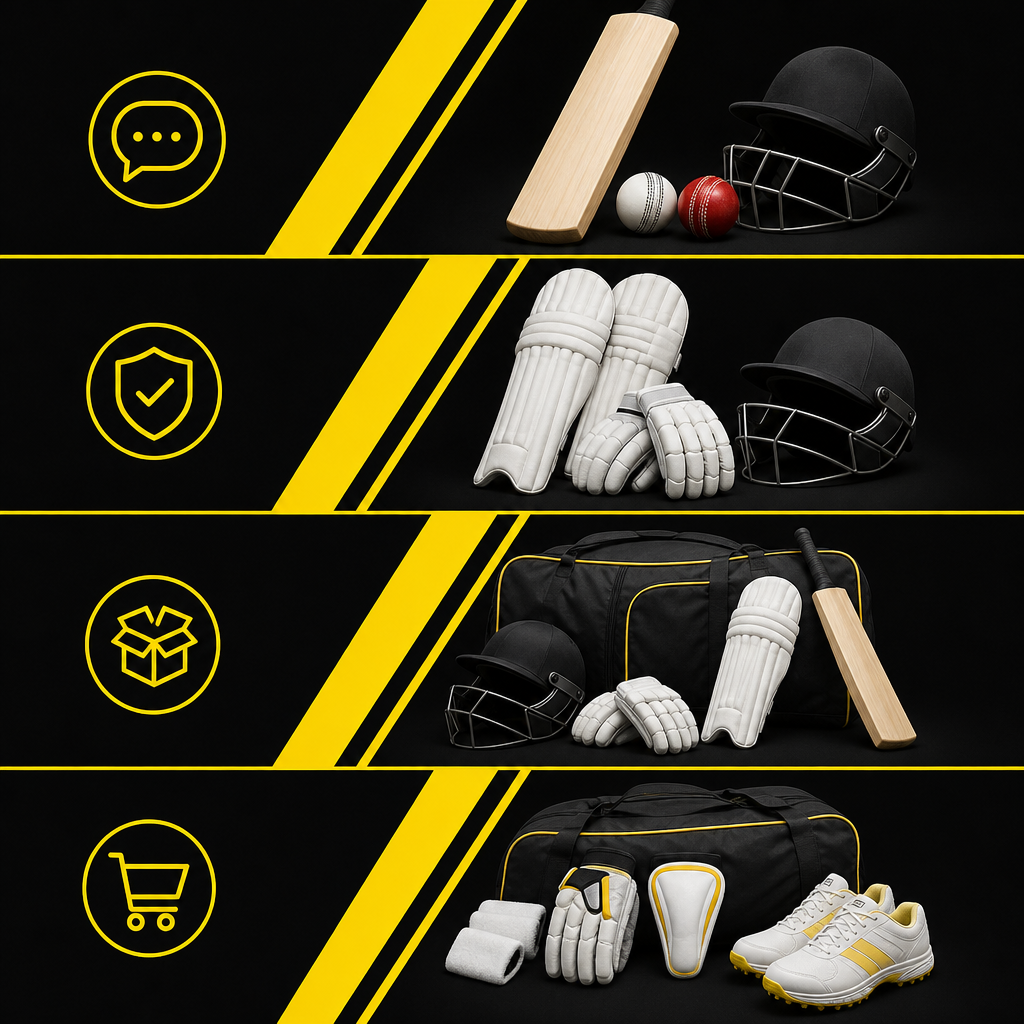
Ask your club or association three things before you spend anything: what format and ball your child will play, which protective items are compulsory, and what the club supplies. Many clubs lend shared helmets, pads or match balls, so buying duplicates is an avoidable cost.
This step takes one email or a chat with the coach, and it saves the most money of anything on this list.
Confirm the format and ball type. Junior cricket runs through a mix of programmes, from modified formats with soft balls to full hard-ball competitions. Which one applies depends on your child's age, the association and the competition. Don't assume. A child who is ready in size and skill may still be placed in a soft-ball format, and the reverse can happen too.
Check the protective gear rules. Local associations set their own requirements on helmets, abdominal guards and other protection, and they differ on things like ball weights. We deliberately don't quote figures here, because the rules that matter are the ones your association publishes. Read them or ask the coach.
Ask what the club provides. Clubs often hold a stock of shared gear. Helmets, pads and match balls are the usual items. Shared gear is fine for trying the sport, but it is rarely a good fit for a growing child across a full season, and hygiene matters for things worn against the skin. Our view: borrow while you decide, then buy the items your child wears most.
Ask what the coach recommends. Coaches see which kids arrive with the wrong gear. A two-minute question about whites versus club teamwear, or shoe type for local grounds, prevents a second shopping trip.
What does a beginner need for soft-ball and intro cricket?
A beginner needs a correctly sized bat, a few soft or training balls, a broad-brimmed hat, comfortable clothing and a small kit bag. Intro programmes are built around fun and participation, so protective gear is usually minimal. Keep the spend low until your child commits to a full season.
At this stage, the aim is to get your child hitting, throwing and catching and wanting to come back next week. That doesn't need a $400 bat.
The starter checklist:
- Bat. Size matters more than brand. A bat that is too long or heavy teaches poor technique and puts children off. Our Cricket Bat Weight Guide covers how to judge it. In short, if your child can't hold the bat comfortably in a ready position, it is wrong for them.
- Soft or training balls. Buy a few. They get lost, and backyard practice is where most juniors improve. Look at our Cricket Balls and Training Balls collection for options suited to this stage.
- Hat. Broad-brimmed or legionnaire style. Many Australian junior games are played in the middle of the day.
- Comfortable clothing. Shorts or track pants and a t-shirt are fine for most intro sessions. Check whether the programme issues a shirt.
- Small kit bag. Nice-to-have, but a basic one keeps the bat, hat, water bottle and balls together and helps children take responsibility for their gear.
What you can skip at this stage: pads, a helmet, premium bats and branded clothing, unless your programme says otherwise. If your child is happy to carry on after a few weeks, then you can invest.
What does a junior need for hard-ball club cricket?
A junior moving to hard-ball club cricket needs a bat, helmet with neck guard, batting pads, batting gloves, a box (abdominal guard), thigh guard, whites or club teamwear, cricket shoes and a kit bag. Protection is not optional once the ball is hard, so budget for fit and safety first.
This is the step where parents often feel the cost jump. It helps to break the list into protective gear, batting gear and clothing.
Protective gear (prioritise this)
- Helmet with neck guard. Safety item, not a fashion item. Fit matters more than price, and a helmet should sit snug without moving when your child shakes their head. Our Cricket Helmets Guide covers fit in detail. Check that your association's requirements are met, including any standard the helmet must comply with.
- Box (abdominal guard). Compulsory in most hard-ball settings and worth buying in your child's own size. Youth and girls' options exist, so ask if you are unsure.
- Thigh guard. Often overlooked by first-time families. It protects against the ball striking the upper leg, and it needs to be the correct size so it doesn't ride up or restrict running.
- Batting pads. Lightweight junior pads are the right choice. Oversized pads slow running between the wickets and shift on the leg.
- Batting gloves. Fit changes with growth. Our Batting Gloves Guide explains sizing, so we won't repeat it here. The key point is that gloves should allow a full grip without bunching.
- Optional extras. An arm guard or chest guard can add confidence against quicker bowling, but they are not essential for most children. Check the Protective Gear collection once you know what your association requires.
Batting and clothing
- Bat. Suit it to your child's height, strength and level now. If you are choosing between models, our Best Cricket Bats in Australia guide helps you shortlist.
- Whites or club teamwear. Ask first. Many junior clubs issue or require a specific shirt and cap, while others allow plain whites. Our Cricket Clothing Buying Guide covers fabric and fit.
- Cricket shoes. Look for a sole that suits your local grounds. Rubber-soled shoes are often enough for juniors, while spikes suit turf wickets. Ask the coach.
- Kit bag. A bag with enough room for pads, helmet and bat saves a lot of morning chaos. Our Cricket Kit Bags Guide helps you pick the right size, and wheels become useful as the load grows.
What extra gear do bowlers and wicketkeepers need?
Bowlers need little beyond good shoes and a few practice balls. Wicketkeepers need keeping gloves and inners, and often keeping pads and a helmet for standing up to the stumps. Many clubs lend keeping gear, so check with the coach before buying a specialist kit that your child may only use for a season.
Bowlers. The best investment is a handful of balls for practice, and shoes that give good grip and support in the delivery stride. Cones or markers are a cheap bonus for backyard sessions. Don't buy separate bowling gear in the early years.
Wicketkeepers. Keeping gloves are the main purchase, along with inner gloves for padding and comfort. Keepers also need the same protective basics as other players, and any protection the association requires when standing up. Keeping gloves wear and need care to last, so our Wicketkeeping Gear Care guide is worth a read once you have bought a pair.
A simple rule: if your child is trying keeping for the first time, use club gloves for a few weeks. If they want to keep every week, buy their own.
How do you spend smart on junior cricket gear?
Spend on fit and protection, save on everything else. Buy the bat and helmet to suit your child now, not to grow into. Clearance stock and complete junior sets suit beginners well. A mid-range item that fits properly will outperform a premium item that does not.
This is where honest advice matters most, because the most expensive option is not always the best option for a child at their current level.
| Item | Where to spend | Where to save |
|---|---|---|
| Helmet | Correct fit and compliance with association rules | Skip extra features a beginner won't use |
| Bat | Correct size and weight for now | Skip premium willow until the child has played a few seasons |
| Pads and gloves | A proper fit that allows free movement | Mid-range or clearance is usually fine for juniors |
| Box and thigh guard | Correct size and comfort | Basic models do the job |
| Clothing | Sun protection and comfort | Plain whites or club teamwear over premium brands |
| Kit bag | Size that fits the gear | Basic bag until the load grows |
Cricket sets. A junior set bundles the main items at a lower combined cost than buying separately. For a first season, that is often the sensible choice. Browse the Junior/Kids Gear and Cricket Sets collection to see what suits your child's stage.
Clearance. Last season's colours and designs work the same as this season's. If the size is right, clearance is good value on pads, gloves, bags and clothing. Check the Clearance collection regularly, particularly before the season starts.
Don't buy to grow into. It is tempting to buy a bigger bat or larger pads so they last two seasons. In practice, oversized gear hurts technique, slows running and can make a helmet or guard unsafe. Buy for now, and consider passing the gear on within the club when your child outgrows it.
What is on a junior cricket season checklist?
Use this tick-box list at the start of each season: confirm club requirements, check last season's gear still fits, then tick off the batting, protective, clothing and carry items below. Add sunscreen and a water bottle, because they matter every match day.
Before the season
- [ ] Confirm format, ball type and rules with the club or association
- [ ] Ask what the club supplies (helmets, pads, match balls)
- [ ] Check last season's gear still fits (helmet, pads, gloves, box, thigh guard)
Batting and protective gear
- [ ] Bat sized for now
- [ ] Helmet with neck guard (hard-ball)
- [ ] Batting pads
- [ ] Batting gloves
- [ ] Box (abdominal guard)
- [ ] Thigh guard
Bowlers and keepers
- [ ] A few practice balls
- [ ] Keeping gloves and inners (if keeping)
- [ ] Keeping pads (if required)
Clothing and footwear
- [ ] Whites or club teamwear
- [ ] Cricket shoes
- [ ] Hat
Match-day carry
- [ ] Kit bag
- [ ] Sunscreen
- [ ] Water bottle
- [ ] Spare socks and a towel
On sun protection, SunSmart recommends combining clothing, a hat, sunscreen, shade and sunglasses rather than relying on one. For a child spending hours in the field, that is worth building into the routine.
Why mismatched kits are the real problem, not cost
After a lot of conversations with parents, the pattern is clear: the expensive mistake is rarely the cost of the whole kit. It is the one wrong item, usually an oversized or overpriced bat, bought with the best intentions and used badly.
Here is what we see repeatedly. A parent arrives with a bat that is too big because the child will grow into it. Or a premium bat bought because the shop said it was the best. Then the helmet is borrowed, the pads are from an older cousin, the gloves are a different size, and the child is carrying the lot in a shopping bag. The gear doesn't work together, and the child doesn't enjoy it.
Our position is simple. The best product is the one that suits the player's actual level, use case and budget, not just the most expensive option. A durable mid-range kit that fits well will do more for a ten-year-old's confidence than a premium bat on the wrong frame.
This applies to English willow too. Parents of keen juniors sometimes ask about stepping up, and that is a reasonable question for a committed player. But because every willow bat differs in grain, weight distribution and pickup, we don't recommend picking one off a screen. When customers shop online, especially interstate, we share photos, weights and pickup feedback on a shortlist and guide the choice by age, playing style and level of cricket. That process has cut unsuitable purchases and built repeat business, because customers trust advice that doesn't push the top of the range.
A practical order of priorities we give families:
- Protection first. Helmet, box, thigh guard. Fit and compliance, then price.
- Bat second. Right size for now.
- Everything else. Clothing, bag and extras can come from clearance or sets.
If you take one idea from this article, take that order.
Ready to Kit Out Your Junior Cricketer?
Shop Highmark Cricket's Junior/Kids Gear and Cricket Sets, Protective Gear, Cricket Balls and Training Balls, and Clearance collections for practical, trusted brands at everyday low prices, with fast dispatch from Melbourne stock. Not sure what size or what your child genuinely needs this season? Contact the Highmark Cricket team for honest advice before you buy.
References
- Cricket Australia, Play cricket: programmes and finding a club
- Play Cricket Australia, Find a club and competition
- SunSmart, Sun protection for Australians
Frequently asked questions
What cricket gear does my child need to start?
For soft-ball and intro programmes, a child needs a correctly sized bat, a few soft or training balls, a hat, comfortable clothing and a small kit bag. Ask the programme what is supplied first. Protective gear is usually only needed once your child moves to hard-ball cricket.
Do kids need a helmet in junior cricket?
In hard-ball cricket, a helmet with a neck guard is a core protective item for batting, and many associations require one. Soft-ball programmes may not. Rules vary by association, so confirm with your club or coach before the season.
Should I buy a cricket set or individual items?
For a first season, a junior cricket set is often the sensible choice because it bundles the main items together at a lower combined cost. Once your child is playing regularly, buy individual items such as the bat, helmet and gloves to match their size and level.
Is it worth buying an English willow bat for a junior?
Usually not for beginners. A well-sized bat suited to your child's current level matters far more than the willow grade. For committed players who have played several seasons, English willow can make sense, ideally with advice on weight, pickup and playing style before you buy.
How often do juniors need to replace cricket gear?
Check fit at the start of each season, because children grow quickly. Bats, helmets, pads, gloves, boxes and thigh guards can all become too small. Quality gear often lasts more than one season if it still fits, and it can be passed on within the club.
