




How to Knock In a Cricket Bat: A Step-by-Step Guide for English and Kashmir Willow

Learn how to knock in a cricket bat: oiling, mallet work, throwdowns, how long it takes and the mistakes that crack new English and Kashmir Willow bats.
To knock in a cricket bat, apply a thin coat of raw linseed oil to the exposed willow only, then strike the edges, toe and face with a bat mallet or old leather ball, starting gently and building firmness. Industry guidance suggests roughly 6-10 hours before using a match ball, but it is a guide, not a guarantee.
Most new bats that crack, crack in the first few matches. The cause is rarely a bad bat. It is almost always a bat that went from the shop to the middle with no preparation. For English Willow, knocking in is not optional, and rushing it is the most common way to ruin a good blade.
This guide covers what knocking in does, how English and Kashmir Willow differ, the full step-by-step process, how long it takes, the mistakes to avoid and how to look after your bat through an Australian season. It is the advice we think a retailer should give after checkout, not just before it.
Key Takeaways
- Knocking in compresses and hardens the willow fibres so the face can handle a hard leather ball. It is essential for English Willow.
- Oil only the exposed willow, lightly, with raw linseed oil. Never oil the splice or the handle, and never over-oil.
- Start with gentle work on the edges and toe, then build firmness on the face, then finish with short sessions using an old leather ball.
- The commonly cited guide is roughly 6-10 hours. Softer, higher-grade willow often needs more care, not less.
- Heat is a real risk in Australia. Never leave a bat in a parked car through summer.
- Fine hairline cracks along the grain are normal. Deep splits, or cracks at the splice, are not.
Summary Table
| Topic | English Willow | Kashmir Willow |
|---|---|---|
| Is knocking in needed? | Yes, essential | Usually lighter preparation, follow the maker |
| Oiling | Light raw linseed oil on exposed willow only | Often minimal, check the maker's guidance |
| Risk if rushed | Higher, especially on softer grades | Lower, but not zero |
| First ball to use | Old leather ball, then a match ball | Match to the ball you will actually play with |
| Main reward for patience | Longer bat life and better performance | Fewer early dents and marks |
What does knocking in a cricket bat actually do?
Knocking in compresses and hardens the soft willow fibres on the face and edges so they can absorb the impact of a hard leather ball. A fresh blade is soft and open-grained at the surface. Without preparation, the fibres can tear, split or lift when a hard ball hits.
A cricket ball is a cork core wrapped in leather and travelling fast. The contact area is small and the force is concentrated. Willow is a light, soft wood, which is exactly why it performs so well. English Willow bats are made from Salix alba var. caerulea, a species grown specifically for bats. That softness is also the weakness. Knocking in packs the fibres tighter, spreads the load and gives the face a harder, more resilient surface.
Oil plays a supporting role. A thin coat of raw linseed oil helps keep the willow from drying out and becoming brittle. Too much does the opposite. It soaks in, softens the fibres and adds weight, which defeats the purpose.
It helps to think of knocking in as training the bat. You are not making it tough by force. You are introducing it to impact in stages, so the fibres settle into a firm, even surface rather than splitting under the first hard hit.
Does every bat need knocking in? English Willow vs Kashmir Willow
Every English Willow bat needs knocking in, regardless of price or grade. Kashmir Willow is typically denser and harder, so it usually needs less, but a light preparation session is cheap insurance. Always follow your maker's instructions, and remember that a bat sold as pre-prepared may still need extra work.
English Willow and grade
English Willow is the standard for serious club and junior cricket played with a leather ball. Grades describe the quality of the willow: grain straightness, number of grains, blemishes and appearance. Higher grades generally use cleaner, more prized willow, and that willow is often softer and more responsive. Softer willow rewards good preparation and punishes poor preparation. A lower-grade English Willow bat is not exempt, it is just usually a little more forgiving. Every grade needs the full process.
Kashmir Willow
Kashmir Willow bats are typically heavier and harder than English Willow, and they are commonly bought for casual, school or tennis-ball cricket. Because the wood is denser, a long knocking-in programme is generally not required. We still suggest light oiling, if the maker recommends it, and a short session of gentle mallet work. It costs you very little time. If you plan to play with a leather ball regularly, check the maker's guidance first and ask whether that bat is intended for it.
What about pre-prepared bats?
Some bats are sold as pre-prepared, ready to play, or machine-pressed. This usually means the maker has done some compression at the factory. It does not mean the bat has been prepared for your bowlers on your pitches. The honest view is that pre-pressing reduces the work but rarely removes it. Treat the label as a head start. Add gentle mallet work and some throwdowns with an old leather ball before a match, and read the maker's care sheet, because warranty terms often depend on following it.
How to knock in a cricket bat: step by step
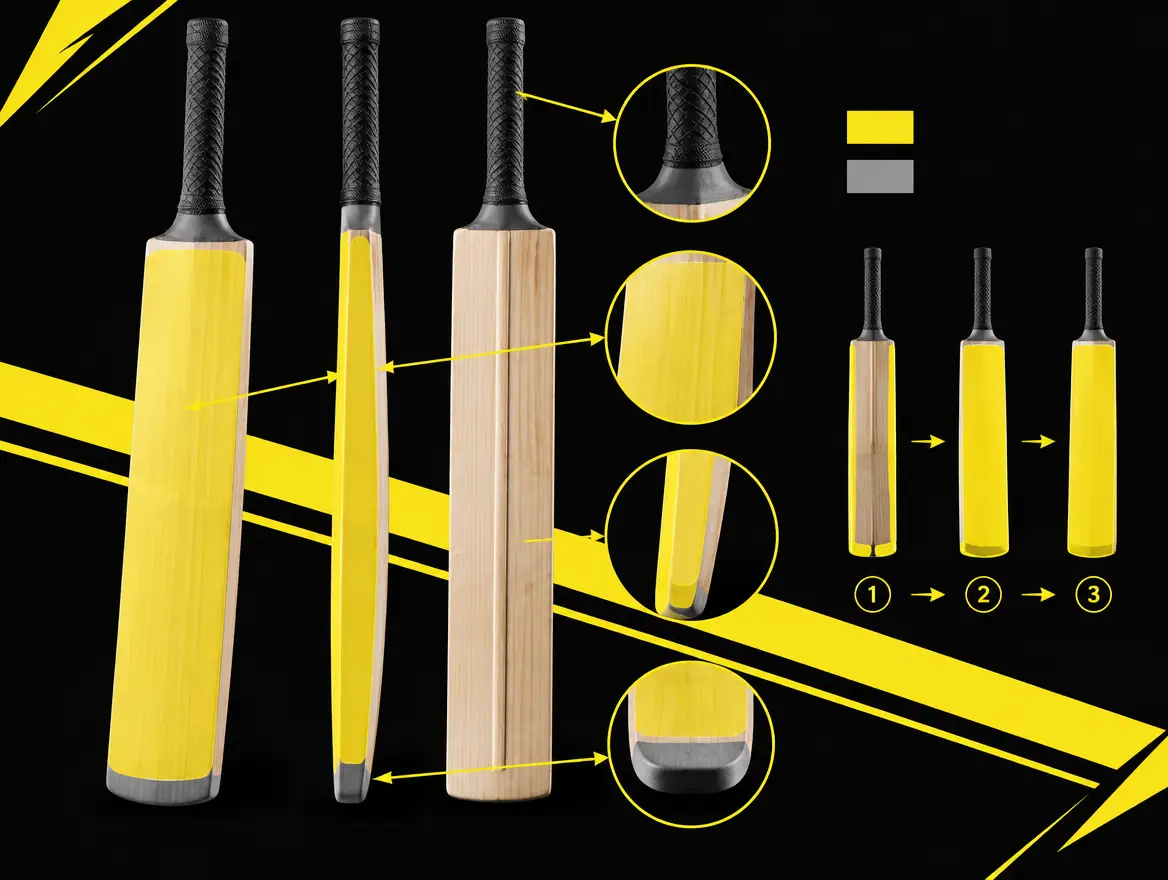
Oil lightly, strike gently, build firmness gradually, then finish with old-ball throwdowns. That sequence protects the willow while the fibres compress. You need raw linseed oil, a lint-free cloth, a bat mallet (or an old leather ball in a sock), and an old leather ball for the final stage.
Step 1: Inspect the bat
Look over the blade before you start. Check the face, edges and toe for marks, and check that the handle and splice (where the handle meets the blade) are sound. Do not sand the face. Leave any factory finish as it is unless the maker says otherwise.
Step 2: Apply a light coat of raw linseed oil
Pour a small amount of raw linseed oil onto the cloth, not onto the bat. Rub a thin, even coat over the exposed willow: the face, edges, toe and back of the blade. Do not oil the splice, the handle, the grip or any stickers. Oil in the splice can weaken the glue joint and loosen the handle.
Lay the bat flat, face up, and let the oil soak in. Wipe off any excess the next day. If the wood still looks dry and thirsty, a second light coat is reasonable. If the surface looks wet or feels tacky, you have used too much.
Step 3: Start with the edges and toe
With a mallet, work along the edges using light, controlled strikes. Angle the bat slightly rather than hitting the edges square-on, and roll it as you go. The edges are the thinnest, most vulnerable part of the bat, so be gentle. Then tap along the toe, which takes more punishment than any other area in a match, and which is where yorkers and moisture do their damage. Many people rush the toe, or skip it, and that is a mistake.
Step 4: Build up the face
Move to the face. Strike across the whole blade, from the shoulders down to the toe, with a little extra time on the middle. Begin with light blows and increase firmness across several sessions, not within one. You are looking for a gradual compression, not dents. If you see marks or denting, ease off.
Step 5: Move to an old leather ball
After mallet work, move to an old, soft leather ball. Use short throwdowns or gentle net hits, not full power drives. This stage tells you how the bat is behaving against the real thing. Do not use a new, hard match ball yet. If you need help choosing a suitable older or training ball, a cricket balls buying guide is a good place to start.
Step 6: Check, rest and repeat
Between sessions, look over the face and edges. Light hairline marks along the grain are normal. Deep dents, lifting fibres or a crack that runs across the grain mean you should stop and reassess. Fit an anti-scuff sheet after knocking in, not before, so you can keep checking the face. The Laws of Cricket (Law 5) allow protective coverings on the blade within limits, so check your competition's rules if you are unsure.
How long does it take to knock in a cricket bat?
Widely cited industry guidance is roughly 6 to 10 hours of knocking in, spread across several sessions. Treat it as a general guide, not a guarantee. Softer, higher-grade willow often needs the longer end, and the bat's own feedback matters more than the clock.
The 6-10 hour figure is commonly quoted by bat makers and retailers, but it is not a standard, and no maker can promise your bat will be ready at a set time. Willow varies. Two bats of the same grade can respond differently, because grain structure, density and moisture all vary from blade to blade.
Spread the work out. Short sessions across a couple of weeks are better than one long marathon. Fatigue leads to heavy, sloppy strikes, and the willow benefits from time between sessions. If your first match is soon, plan backwards from that date, and if the preparation will not fit, delay the first outing rather than compress the process.
Why higher-grade willow often needs more care
The willow in top grades is typically prized for its pick-up and soft, responsive feel. That same softness means there is more to compress and more to lose if you hurry. A premium bat is not tougher because it costs more. It is often the opposite. A lower-grade bat may tolerate a mishit better in its first outings, and a premium one will only repay you if you invest the hours. That is a trade-off worth thinking about before you buy.
Common knocking-in mistakes that crack new bats
The most common mistakes are over-oiling, striking edges flat-on, skipping the toe, using a new hard ball too early and storing the bat in a hot car. Each one is avoidable, and rushing is behind most of them. Here is what goes wrong and why.
Over-oiling. More oil does not mean more protection. It makes the fibres soft, heavy and dull, and can leave the bat feeling dead off the face. A thin coat is enough. If you are tempted to oil again, wait.
Hitting the edges flat-on. Square, hard strikes on the thin edges can split them before they have been compressed. Angle the bat and use light, controlled strikes.
Skipping the toe. The toe is the first part to take a yorker and the first part to absorb moisture from wet grass. An unprepared toe is one of the most common sites for early damage.
Using a new hard ball too early. A new match ball is the hardest test the bat will face. Go to old leather balls first, and keep the pace down.
Storing the bat in a hot car. The inside of a parked car gets far hotter than the air outside, and Australian summers regularly bring extended hot spells (see the Bureau of Meteorology's climate pages). Heat dries out willow and can open cracks or weaken the glue at the splice. Keep the bat indoors, in a cool, dry place, and take it out of the boot.
A scenario most parents will recognise
Consider a 13-year-old who gets a new English Willow bat on Thursday night. The family is busy, there is a match on Saturday, and the bat goes straight into the kit bag. In the first over, a quick bowler with a new ball catches the toe and the edge. The bat looks fine at first, but by the end of the innings there is a split running up the edge and the face is badly dented. The bat has to be repaired or replaced mid-season, and the warranty may not cover it, because many makers exclude damage from unprepared use. A few evenings of gentle knocking in would almost certainly have helped. This is a hypothetical, but it is a pattern that any club coach will tell you is familiar.
How do you know your bat is ready?
A bat is ready when the face feels uniformly firm, shows only shallow, even marks from the mallet, and old leather balls leave no deep dents. If the surface still dents or feels soft in patches, keep going. When unsure, do more throwdowns rather than risk a match ball.
Use these checks:
- Look. The face should look even, with no deep dents or raised fibres. Fine marks along the grain are fine.
- Feel. Run your thumb over the face and edges. It should feel firm and consistent, not spongy in spots.
- Sound. A ready bat tends to sound crisper and more solid when you strike a ball than a fresh one.
- Test. After a few throwdowns with an old ball, the blade should show no new dents. If it does, go back to gentler work.
If you have done a solid amount of work and the bat still seems soft, do not panic. Ask the maker or a knowledgeable retailer for advice. Honest advice here saves a bat.
In-season care for cricket bats in Australia
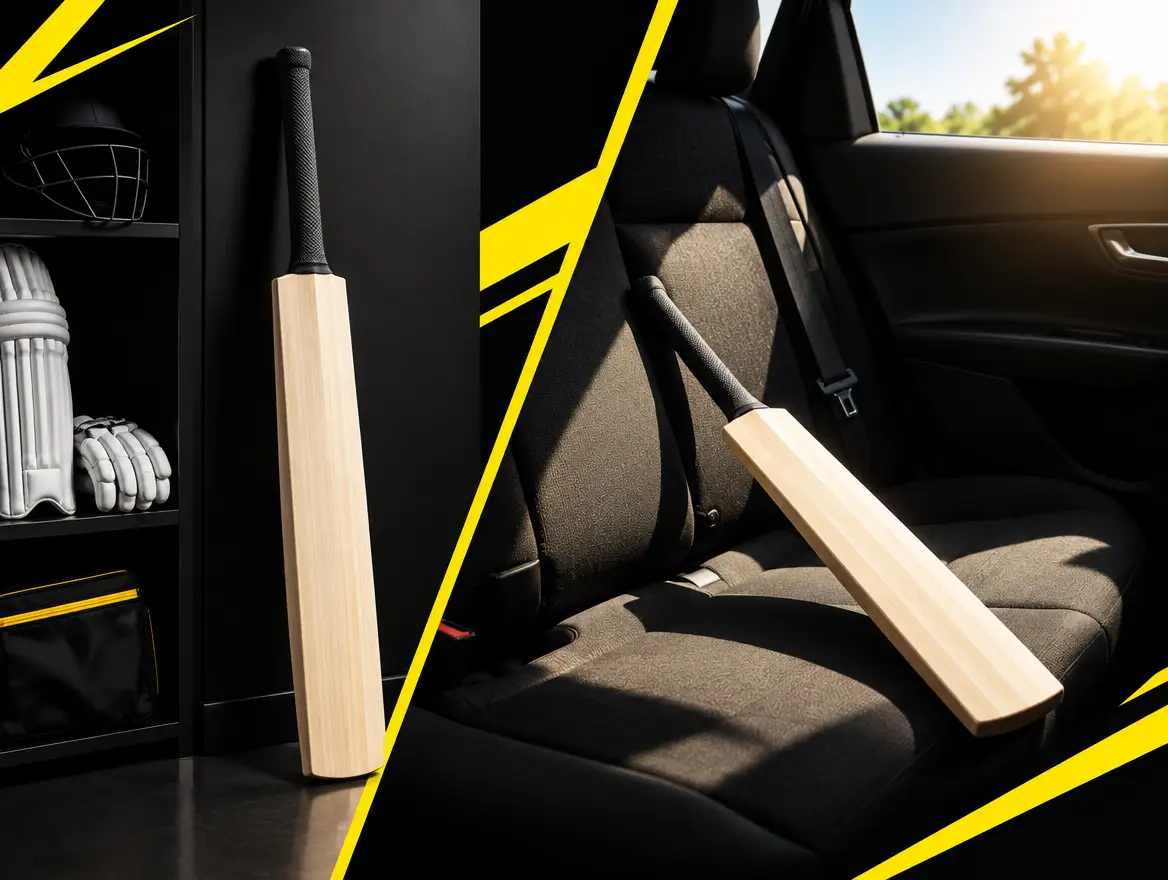
In-season care is simple: keep the bat dry, store it indoors, avoid heat, and check it after each match. Small hairline cracks along the grain are normal. Deep splits, cracks at the splice or loose handles are not, and need a repairer's attention.
Day-to-day habits
- Wipe the bat dry after use, especially after wet grass or a damp outfield.
- Keep it out of the boot of the car and out of direct sun.
- Store it indoors, away from damp garages and sheds, and away from heaters.
- Avoid standing the toe in water or wet grass.
- Re-oil only when the willow looks dry, and use very little. Most bats need far less oil than people think.
- Check the face and edges after each match, and stop using the bat if you see a new crack running across the grain.
When surface cracks are normal
Fine, shallow lines running with the grain on the face are common on a well-used bat. They are usually cosmetic. Minor edge marks and small dents from ball impact are also normal.
Take the bat to a repairer if you see a split across the grain, a crack at the splice, a gap opening in an edge, a rattling handle, or a toe that has started to chip or soften. Early repairs are usually cheaper and more successful than waiting. If the bat is still under warranty, check what your maker covers before attempting a repair yourself.
Why the most expensive bat is not always the right bat for a junior
A top-grade bat suits a player who will prepare it properly and hit the ball cleanly. A junior who will not commit to knocking in is often better served by a durable, mid-range bat suited to their level. The most expensive grade is not automatically best.
This is where I part ways with a lot of the industry. The standard advice is to buy the best bat you can afford. I think the better question is what will this player actually do with the bat in its first month. Premium willow rewards patience, preparation and a clean hitting technique. A junior who will rush the process, or who is still learning to hit the middle, can end up with an expensive bat that cracks early, or that never plays to its potential.
At Highmark, a large part of our online sales is helping customers choose between bats that are all slightly different in grain, weight distribution and pick-up. Many customers hesitate to buy a premium bat online without seeing it, which is fair. So we built a personalised selection process: we share photos, weights and pick-up feedback on shortlisted bats, and we guide the choice based on age, playing style and level of cricket. In our experience, this has improved confidence for interstate online orders and reduced unsuitable purchases. It has also brought repeat customers and referrals.
Preparation is part of that conversation. We ask how much time the player, or their parents, will realistically put into knocking in. If the answer is not much, we say so, and we point toward a bat that will cope with real-world use rather than just the most expensive option. That is what honest advice looks like in practice, and it is how we try to help customers buy confidently.
If you want to browse English Willow bats by grade at Highmark Cricket, you can do so online with fast dispatch from Melbourne stock. If you are unsure which willow and grade suits your level, or how much preparation your bat will need, contact the team. We are happy to talk it through with players, coaches, clubs and schools.
References
Frequently asked questions
How long does it take to knock in a cricket bat?
The widely cited industry guidance is roughly 6 to 10 hours, spread across several sessions. It is a general guide, not a guarantee. Softer, higher-grade English Willow often needs the longer end. Judge readiness by how the face looks and feels, not just the clock.
Do you need to oil a Kashmir Willow bat?
Often very little, if at all. Kashmir Willow is typically denser and harder than English Willow, so heavy oiling is rarely needed. Check your maker's care instructions, because some recommend a light coat and others do not. If in doubt, apply very little.
Can you knock in a cricket bat too much?
Yes, in the sense that heavy or aggressive hammering can damage the blade, and over-oiling can leave the willow soft and heavy. Once the face feels firm and even, there is no benefit in continuing. Use light, controlled strikes and stop when the bat is ready.
Can I use a cricket ball instead of a mallet to knock in my bat?
Yes, an old leather ball in a sock is a common substitute for a mallet in the early stages. After that, use an old leather ball for short throwdowns. Avoid a new, hard match ball until the bat is well prepared.
Can I use a pre-prepared cricket bat straight away?
Not safely, in most cases. Pre-prepared or pressed bats have had some factory compression, but they usually still benefit from extra mallet work and old-ball throwdowns. Read the maker's instructions, as warranty terms often depend on following them.
