




Cricket Gear by Category: A Buyer's Guide to Gloves, Pads, Helmets, Protection, Balls, Kit Bags and Teamwear

Shop cricket gear by category and level. Honest advice on helmets, protection, gloves, pads, keeping gear, balls, kit bags and club teamwear in Australia.
Buy cricket gear by category and level, not by price. Start with protection (helmet, abdominal guard, thigh, arm and chest guards), then batting gloves and pads, wicket-keeping gear if the player keeps, a ball matched to their grade, and a kit bag sized to the gear. Match each item to level, role and budget.
Most buying mistakes in cricket come from shopping the wrong way around. Parents grab the biggest brand name, clubs order whatever is cheapest in bulk, and new players spend on a bat before they own a helmet that fits. The result is gear that is too heavy, too small, or simply not suited to the player's level.
This guide walks through each category in the order we recommend spending, explains what actually changes between junior, club and senior ranges, and says plainly when a mid-range option is enough. Use it to orient yourself, then go deeper into the category you need.
Key Takeaways
- Protection comes first in the budget. A helmet, abdominal guard and the right body guards matter more than a premium bat.
- Junior, club and senior ranges differ mainly in weight, padding construction and sizing, not just brand and price.
- A durable mid-range glove or pad set is often the best value for juniors and club players, who outgrow or wear out gear quickly.
- Wicket-keeping gloves are essential for anyone keeping regularly. Keeping pads are optional for many community keepers.
- Match ball weight to grade, and check your association's playing conditions before buying a batch for the season.
- Choose a kit bag by the volume of gear you carry, and order club teamwear early so sizing and decoration are settled before the first match.
Summary Table
| Category | What it does | Junior | Club | Senior or premium |
|---|---|---|---|---|
| Helmets and head protection | Protects the head and face from the ball | Fit and certified protection matter most | Certified helmet with adjustable fit is enough | Extra adjustability and comfort, not extra safety |
| Body protection | Guards the thigh, arm, chest and groin | Lighter, smaller sizes | Solid mid-range suits most players | Slimmer, lower-profile builds |
| Batting gloves | Protects hands and fingers while batting | Lighter, simpler padding | Durable padding, good value range | More refined protection and feel |
| Batting pads | Protects the shins and knees | Light, sized to age | Mid-range is usually enough | Lighter, better shaped, higher price |
| Wicket-keeping gear | Gloves and optional pads for keepers | Only if keeping regularly | Dedicated gloves recommended | Matched to standing up and pace |
| Cricket balls | Match and practice balls | Smaller, lighter balls by age | Leather for matches, practice balls for nets | Match-grade leather balls |
| Kit bags | Carries and organises gear | Smaller duffle or wheelie | Sized to kit volume | Larger wheelie or specialist bags |
| Clothing and teamwear | Playing kit and club identity | Growth room and durability | Team orders with consistent sizing | Full-season kits with custom decoration |
Why You Should Shop by Category and Level, Not Price
The best cricket gear is the product that suits the player's level, role and budget. Price is a poor guide on its own. A premium item built for a senior batter can be heavier, more specialised and harder to use well than a mid-range piece designed for a junior or club player.
We see this in real-world use every week. A junior who is still growing will outgrow a premium glove or pad within a season or two. A club player who bats at number seven gets little extra benefit from the lightest, most expensive pads. Spending more rarely fixes a poor fit, and a poor fit is the most common reason gear underperforms.
The approach that works is simple:
- Decide the player's level: junior, club or senior.
- Decide the role: batter, bowler, all-rounder or keeper.
- Spend first on protection and fit, then on performance items.
- Pay for premium features only where the player will notice them.
That is practical buying advice, not just the most expensive option. We work with players, coaches, clubs and schools, and the customers who are happiest a season later are the ones who bought suited to their level and playing style.
For a full list of what a player needs before the first match, see our Cricket Equipment Checklist. For head-to-head product breakdowns, see our Cricket Gear Comparisons article.
Head and Body Protection: Why It Comes First in the Budget
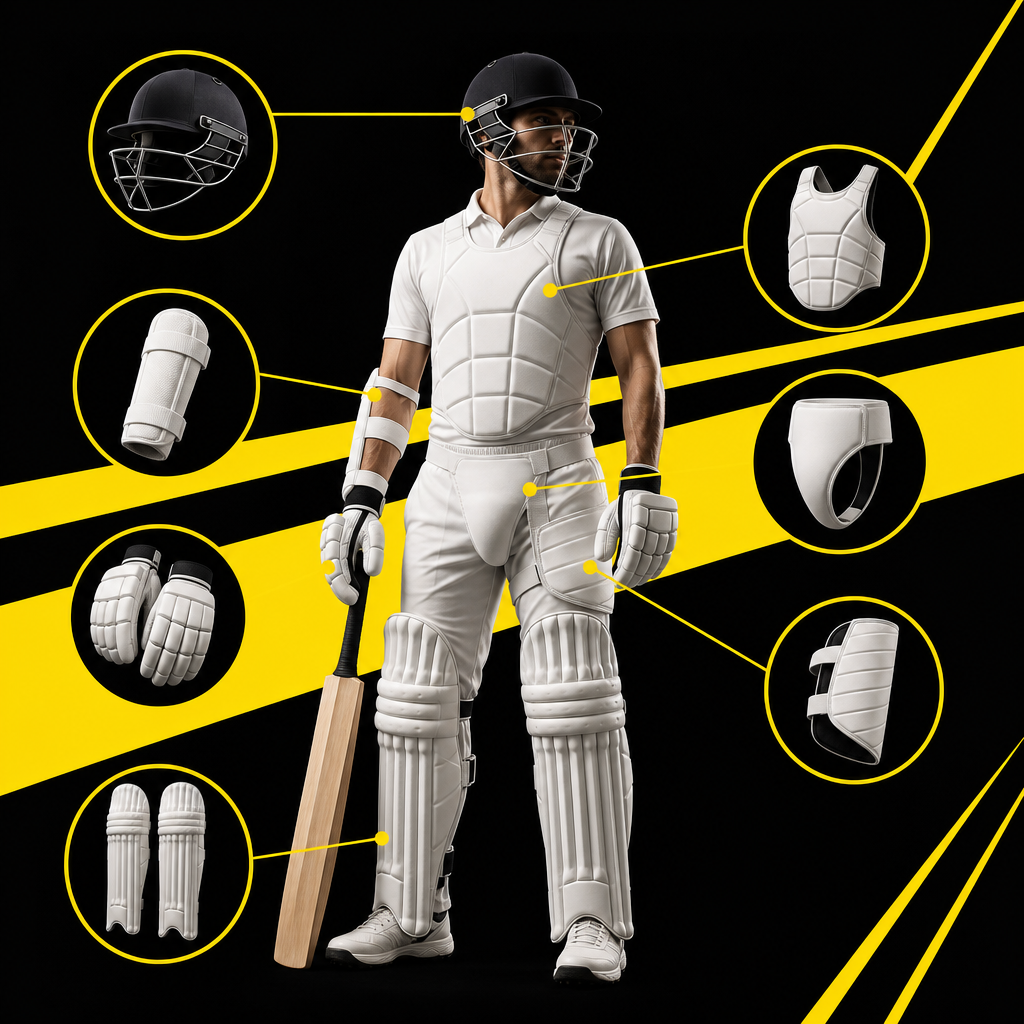
Protection comes first because it prevents injuries that end seasons, and because it cannot be improvised on match day. Buy a certified helmet, an abdominal guard and the right thigh, arm and chest guards before spending on performance gear such as a premium bat.
Helmets and the BS 7928:2013 standard
A cricket helmet is only as good as its fit and its certification. The recognised benchmark is BS 7928:2013, the British Standard that specifies requirements and test methods for cricket head protectors, including impact testing against a cricket ball. Look for the BS 7928:2013 marking on the helmet and in the product listing. Check the current status of the standard and any amendments on the BSI website.
A few honest points on helmets:
- Certification is not a guarantee. A helmet marked to the standard has met a defined test. It does not make a player injury-proof, and a badly fitted helmet protects less than a well-fitted one.
- Fit beats features. Adjustable sizing, secure chin and neck fit and a faceguard that sits correctly matter more than styling.
- Replace after a heavy impact. If a helmet has taken a direct hit from a fast ball, treat it as used up, even if it looks fine.
- Check your competition rules. Cricket Australia and state and territory associations set helmet requirements for junior and community cricket. Confirm what your competition requires before the season.
For juniors, a certified mid-range helmet with good adjustability is almost always enough. Premium helmets add comfort, ventilation and finer adjustment. They do not add a different class of safety just because they cost more. Browse our Cricket Helmets and Head Protection range for the options.
Thigh, abdo, arm and chest guards
Body protection is the category that gets skipped most often, because it is invisible under the clothing. It should not be. The abdominal guard is non-negotiable for male players at every level. Thigh, arm and chest guards matter most when facing quick bowling, and they are worth having for any junior who is batting against a hard ball.
What changes by level is mainly size and profile. Junior guards are smaller and lighter. Senior guards are slimmer and lower-profile so they do not restrict movement. A well-priced mid-range guard in the right size outperforms an expensive guard that is too big. See our Body Protection hub for the full range.
Batting Gloves and Pads: What Changes Between Junior, Club and Senior
Between junior, club and senior ranges, gloves and pads change in weight, padding construction, shaping and sizing. Juniors need lighter gear scaled to smaller hands and legs. Club players need durable protection that lasts a season. Senior ranges add refinement, lighter materials and better shaping, usually at a higher price.
Batting gloves
A glove has one job: protect the hands and fingers without making it hard to hold the bat. Junior gloves use lighter padding and simpler construction, and they are sized by age and hand length. Club gloves add more robust finger protection and tougher materials. Senior and premium gloves use more segmented, refined padding and better materials for feel.
For most club players, a mid-range glove delivers the quality, durability and value they need. The step up to a premium glove is worth it when a player bats at the top of the order against genuinely quick bowling and has the budget after protection is covered. Our Batting and Fielding Gloves hub covers the range, including fielding options.
Batting pads
Pads are about coverage and mobility. Junior pads are lighter and shorter so a young player can run and turn without being weighed down. Club pads are built to survive a season of use. Senior pads are lighter again for their level of protection, with better shaping around the knee and shin.
The common mistake is buying pads a size up so a junior will grow into them. Oversized pads slow the player down and shift on the leg, which hurts both safety and confidence. Buy for the player's current height and replace as they grow.
Before buying either item, check measurements against our Batting Glove and Pad Size Guide. Left-hand and right-hand fit also matters, so confirm which side the player bats.
Wicket-Keeping Gear: When a Keeper Needs Dedicated Gloves and Pads
A keeper needs dedicated wicket-keeping gloves as soon as they keep regularly. Batting gloves do not give the catching surface, webbing or palm protection required. Keeping pads are a separate decision, and many community keepers do not need them, especially when standing back.
Keeping gloves are built for catching. They have a shaped palm, a webbed or structured catching area and protection around the fingers and thumb. Junior keeping gloves are smaller and lighter. Club gloves add durability and a more secure fit. Premium gloves add refined feel and finer shaping.
A practical way to think about it:
- Keeping occasionally in juniors: A basic, correctly sized pair of keeping gloves is enough. Do not buy premium.
- Keeping every week at club level: Buy a durable mid-range pair of dedicated gloves and add inners.
- Standing up to the stumps regularly: Consider keeping pads and better protection for hands and shins, and prioritise fit.
Keeping pads are lighter and more compact than batting pads, designed for crouching and moving. They are a secondary purchase for most players, so spend on gloves first. Our Wicket-keeping Gear hub lists the full range.
Cricket Balls: Leather Versus Practice Balls and Match Ball Weights by Grade
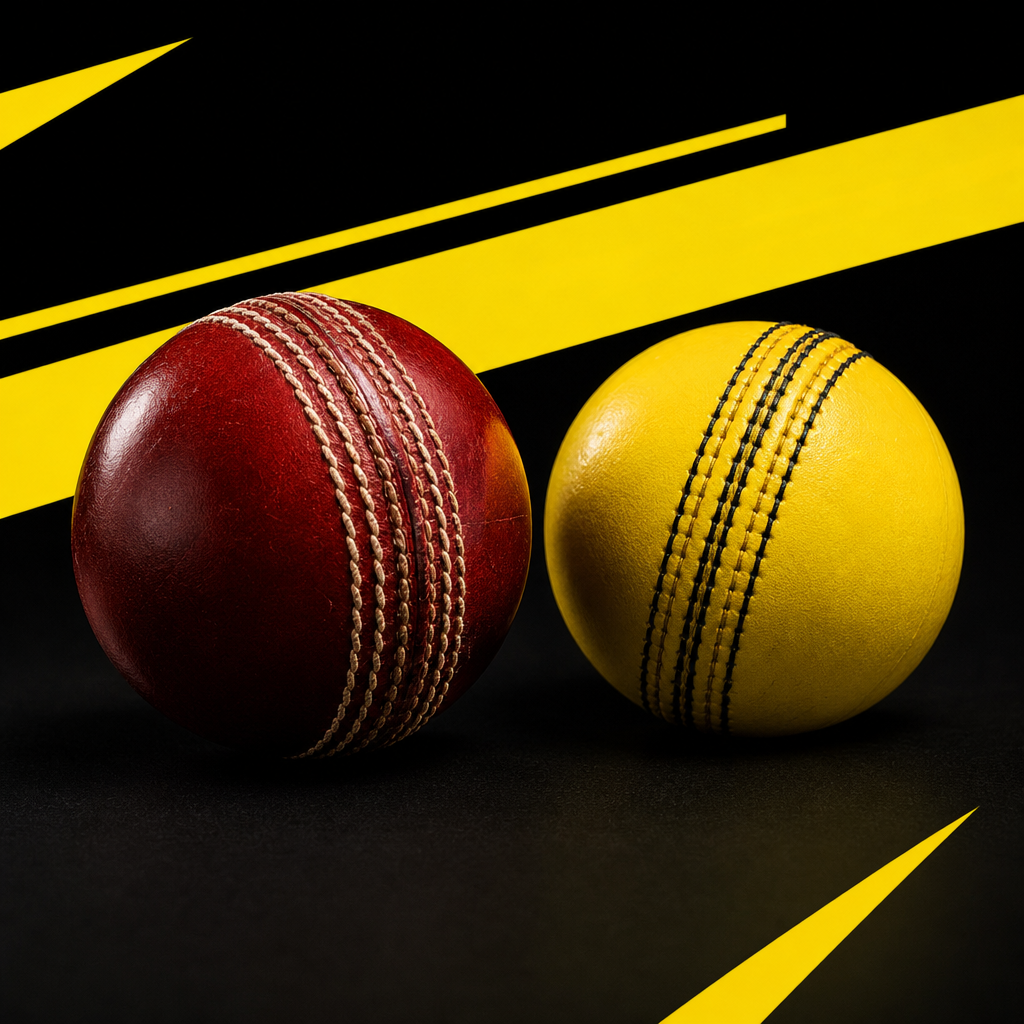
Use a leather ball for matches and a practice ball where the surface or the player calls for it. Match ball weight depends on grade: men's, women's and junior cricket each use a different specification, so check your competition's rules before buying.
Leather versus practice balls
A leather match ball is made for play: it has a stitched seam, a firm core and a surface that behaves as the ball ages. Practice balls, including softer or synthetic options, suit young players learning the game, indoor sessions and situations where a hard ball is a safety concern. They are not a substitute for a leather ball once a player is competing in a leather-ball competition, because the bounce, seam and hardness differ.
For clubs, the sensible split is a small number of quality leather balls for matches and a larger stock of cheaper balls for everyday sessions. Spending on match-grade balls for every net session is where club budgets quietly leak.
Regulation weights by grade
The MCC Laws of Cricket, Law 4, set the ball specification. For men's senior cricket, the new ball must weigh not less than 5.5 ounces (155.9 grams) and not more than 5.75 ounces (163 grams). For women's cricket, the Laws provide a lighter specification, with a new ball weighing between about 140 and 151 grams. The Laws also provide for smaller, lighter balls in junior cricket.
Cricket Australia's playing conditions apply these rules to community and junior competitions, and the ball used can vary by age group and by association. Junior balls are commonly sold by weight in ounces, for example 4.75oz and 5oz, alongside the standard 5.5oz senior ball. Because the age cut-offs differ between competitions, confirm the specified ball with your association or the Laws and playing conditions before ordering. We recommend checking the current edition of the Laws, as specifications can be updated.
When a club buys balls for a season, ordering the right weight by grade avoids the common error of delivering a senior ball to an under-age match.
Kit Bags, Clothing and Club Teamwear
Choose a kit bag by the volume of gear the player carries, not by brand. Then order clothing and club teamwear as a single, planned team order, with sizing, decoration and delivery dates agreed before the season starts.
Choosing a bag by kit volume
A junior carrying a bat, pads, gloves and a helmet needs a smaller duffle or compact wheelie. A club batter carrying two bats, pads, gloves, helmet, body protection and clothing needs more room. A keeper adds gloves, inners and sometimes pads, and may need a bigger bag again.
Two practical rules:
- Lay out the kit first. Put everything the player carries on the floor and choose the bag around that volume.
- Match the bag to how it is carried. Wheelie bags suit players who travel by car with heavy kit. Duffles suit juniors who carry their own gear and lighter loads.
A bag that is too big gets overloaded and heavy. One that is too small ends up with gear strapped to the outside.
Clothing and club teamwear
Playing clothing covers shirts, trousers, caps and hats, and layers for cooler days. For juniors, build in some growth room and favour durable fabric. For adults, look for fabrics that handle Australian summer conditions.
For clubs, teamwear is mostly a logistics problem. Volunteers are often chasing sizes, collating orders and managing deadlines. A few steps make it easier:
- Settle the design and decoration early.
- Collect sizes in one list and order a few extra of common sizes for late joiners.
- Standardise across junior and senior teams so repeat orders are simple.
- Order before pre-season so stock and decoration lead times do not hit match day.
We offer club teamwear enquiries for teams kitting out a season. Our Brand Hubs also make it easy to browse trusted brands side by side.
A Quick Word on Bats
Bats are the most personal purchase in cricket and deserve their own guidance. Weight, balance, pickup and grain structure all differ between bats, and fit to the player matters more than price. Read our Cricket Bat Guide before you commit, and spend on protection before you spend on a premium bat.
Why Honest Advice Beats the Premium Option
Here is the position we hold, and it is not the standard retail line: the best product is the one that suits the customer's actual level, use case and budget, and that is often not the most expensive option.
The clearest example from our own work is bats. Many online customers hesitate to buy a premium English Willow bat without seeing it, because every bat has slightly different grain structure, weight distribution and pickup. So we introduced a personalised selection process. We share photos, weights and pickup feedback on shortlisted bats and guide the customer based on age, playing style and level of cricket. It improved confidence on interstate online orders, reduced unsuitable bat purchases and brought repeat customers and referrals. The lesson applies across every category here: when you help customers buy confidently, you do not need to push.
Now consider a typical scenario. Imagine a parent buying for an 11-year-old in their first season of club cricket, and the parent is inclined towards the premium pad and glove set because it looks like the safe choice. A good adviser will ask how often the child bats, against what kind of bowling, and how fast they are growing. Often the honest answer is a certified helmet, a correctly sized mid-range pad and glove set, and the saved money going to a proper abdominal guard and arm guard. The child ends up better protected, more comfortable and with gear that fits. The parent returns next season, and the one after, because the advice was straight.
That is why we think fast dispatch from Melbourne stock matters, but it is not what builds trust. Product knowledge, honest advice and reliable support do. Discounts bring people in once. Advice brings them back.
Browse by Category or Ask for Advice
Browse each category on the Highmark Cricket site, from Body Protection and Cricket Helmets and Head Protection to Batting and Fielding Gloves, Wicket-keeping Gear and our Brand Hubs. If you are unsure what suits your level and budget, contact us for honest advice. And if your club is kitting out a season, send us a teamwear enquiry and we will help you get it sorted.
References
- British Standards Institution (BSI). BS 7928:2013, Specification for head protectors for cricketers. https://www.bsigroup.com
- Marylebone Cricket Club (MCC). The Laws of Cricket, Law 4 (The Ball). https://www.lords.org/mcc/the-laws-of-cricket
- Cricket Australia. Community cricket playing conditions and policies. https://www.cricket.com.au
Frequently asked questions
What cricket gear does a beginner need first?
A beginner needs a certified helmet, an abdominal guard where relevant, and batting gloves and pads sized to their current measurements. A bat can come after protection. Check your association's requirements, and use a softer practice ball if the player is not yet ready for a hard ball.
What is the BS 7928:2013 standard for cricket helmets?
BS 7928:2013 is a British Standard that specifies requirements and test methods for head protectors used by cricketers, including impact testing with a cricket ball. A helmet marked to the standard has passed defined tests, but fit and condition still determine how well it protects. Competition rules set the actual requirement.
What weight should a cricket ball be for men, women and juniors?
Under the MCC Laws of Cricket, a new men's ball weighs 155.9 to 163 grams (5.5 to 5.75 ounces). Women's cricket uses a lighter ball of roughly 140 to 151 grams, and junior cricket uses smaller, lighter balls. Junior specifications vary by age group and association, so confirm with your competition.
Do I need dedicated wicket-keeping gloves?
Yes, if you keep regularly. Batting gloves do not give the catching surface or palm protection a keeper needs. Keeping pads are optional for many community keepers, so buy gloves first and add pads if you stand up to the stumps often.
How do I choose the right size kit bag?
Lay out everything you carry, then pick a bag that holds it comfortably without overloading. Juniors usually suit a smaller duffle or compact wheelie. Club batters and keepers carrying more gear often suit a larger wheelie bag.
How should a club order teamwear for the season?
Settle the design early, collect all sizes in one list, order a few extras for late joiners, and place the order before pre-season. Standardising across junior and senior teams makes repeat orders simpler for volunteers.
