




Cricket Clothing Buying Guide: Fabrics, Fit and Sun Protection for Australian Conditions

Choose cricket clothing by fabric, fit and sun protection. Compare polyester and cotton whites, junior sizing, UPF 50+ and where mid-range kit beats premium.
The best cricket clothing for Australian conditions is lightweight, breathable polyester or a moisture-wicking blend with long sleeves, a collar and a UPF 50+ rating. Choose a fit that allows pads and full movement, size juniors one step up at most, and match your spend to how often you play, not to the price tag.
Most cricket clothing advice stops at "buy whites and pack a hat". That ignores what a summer day in the field actually does to a player: hours of direct UV, heavy sweating, and short bursts of hard movement. The wrong fabric or fit makes all three worse, and the most expensive option does not automatically solve them.
This guide is about performance and value. It covers fabrics, sun protection, fit and sizing by level, training versus match wear, and club teamwear. For the basics of whites, teamwear and what to pack, see our Cricket Clothing and Match-Day Kit Guide. Here we focus on a different question: what works in Australian heat, and where is spending more actually worth it?
Key Takeaways
- Polyester and moisture-wicking blends suit most club players in hot weather. Cotton-rich whites are comfortable but hold sweat and dry slowly.
- Long sleeves, a collar and a fabric tested to AS/NZS 4399 with a UPF 50+ rating give far more reliable sun cover than sunscreen alone.
- Fit should leave room over pads and through the shoulders and thighs, without loose fabric that catches on gloves, pads or the ball.
- Juniors should be sized up by one step at most. Baggy kit restricts movement and can be a trip hazard.
- Spend on the garments you wear for the longest hours. Training wear can usually be durable mid-range.
- Club teamwear works best when ordered in one batch, with sizes confirmed for the whole squad before production.
Summary Table
| Decision | What to look for | Where spending more helps | Where mid-range is enough |
|---|---|---|---|
| Fabric | Breathable, quick-drying, opaque when dry | Better ventilation and a softer finish for full-day players | Casual and weekly club players |
| Sun protection | Long sleeves, collar, tested UPF rating | Reliable labelled UPF fabric | Add a good hat and sunscreen to a solid shirt |
| Fit | Room for pads, stretch through shoulders and thighs | Tailored cut for senior and representative players | Most grassroots and junior players |
| Junior kit | One size up at most, adjustable waist | Rarely needed | Almost always |
| Training wear | Durable, washable, comfortable | Players training several times a week | Most players |
| Club teamwear | Consistent colour, durable print, full size run | Clubs wanting season-long colour stability | Clubs on a tight volunteer budget |
Why Does Cricket Clothing Choice Matter More Than People Think?
Clothing matters because a cricket day is long, hot and physically uneven. Players stand in the sun for hours, then sprint, dive or bat in short bursts. Fabric that traps sweat, restricts movement or offers no sun cover wears you down, so comfort directly affects concentration, fielding and how long juniors want to stay involved.
Think about the three jobs a cricketer does in a single match. Each one stresses clothing differently.
Batting means long periods in pads, gloves and a helmet. Heat builds under the gear, so the fabric against your skin has to move moisture away rather than hold it. Trousers also need to sit cleanly under the pads.
Bowling is short, high-effort work. Sweat output is high, shoulders and hips need a full range of motion, and a shirt that pulls across the back or grips when wet will affect your action.
Fielding is where sun exposure is longest. A player in the deep can spend hours with no shade, which makes sleeve length, collar coverage and fabric sun rating the main considerations.
Most buying mistakes come from treating all three the same. A heavy, cotton-rich shirt may feel traditional and fine for an hour at training. Across a full day in a Melbourne or Perth summer, it is a different story. The Bureau of Meteorology publishes daily UV forecasts, and in Australian summer the UV index regularly reaches the level where sun protection is recommended.
Cricket Whites Fabric: Polyester Blends Versus Cotton-Rich
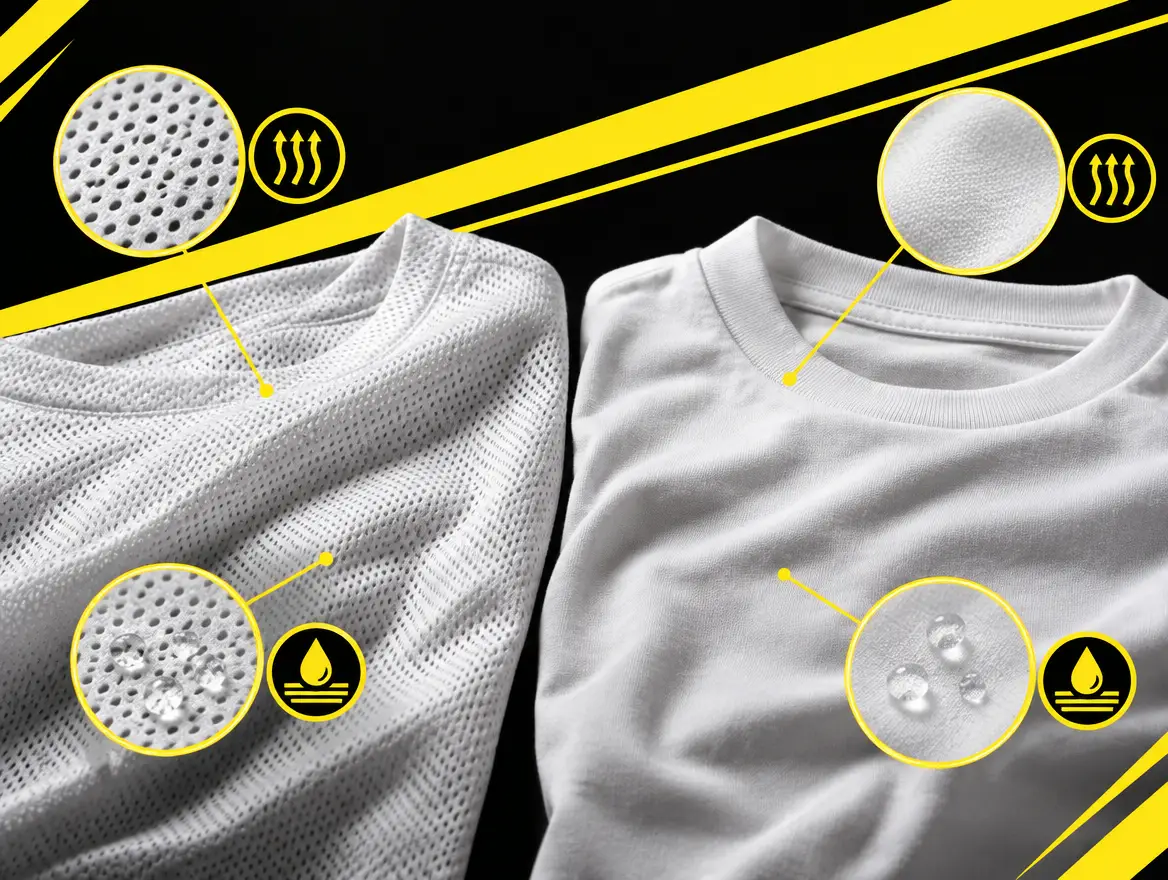
Polyester and moisture-wicking blends move sweat away from the skin, dry quickly, hold their shape and wash easily, so they suit most club players in hot conditions. Cotton-rich whites feel softer and more traditional but hold moisture and dry slowly. Your choice depends on climate, playing frequency and whether your league specifies a fabric.
Polyester and moisture-wicking blends
These fabrics are engineered to pull sweat to the outer surface where it evaporates. In practice, that means a shirt that stays lighter on the body through a long afternoon. Many include a small amount of elastane for stretch, which helps with bowling actions and diving stops.
The trade-offs are real. Cheap polyester can feel clammy if the weave is dense, and very thin versions can become see-through, particularly in white. Hold the garment up to the light before you buy, or ask the retailer how opaque it is.
Cotton-rich whites
Cotton is soft, familiar and comfortable against the skin in mild conditions. It absorbs sweat rather than moving it, so it feels heavier as the day heats up and takes longer to dry. It can also shrink if washed hot.
That does not make cotton wrong. For a cooler-climate player, a casual weekend player, or someone who simply prefers the feel, a cotton-rich blend is a sensible choice. Just be honest about the conditions you actually play in.
How fabric suits batting, bowling and fielding
| Role | Fabric priority | Why |
|---|---|---|
| Batting | Breathability, clean fit under pads | Heat builds under protective gear |
| Bowling | Stretch and fast moisture movement | High sweat output and wide range of motion |
| Fielding | Sun cover and light weight | Longest exposure, least shade |
| Wicketkeeping | Stretch through hips and knees | Repeated squatting and fast movement |
Care and stain resistance
Grass and ball polish stains are a feature of the game. Polyester generally washes out more easily than cotton-rich fabric, but no whites are stain-proof. Rinse promptly, wash cold, and avoid fabric softener on moisture-wicking garments, because it can coat the fibres and reduce how well they move sweat.
Cricket Clothing for Hot Weather and Sun Protection
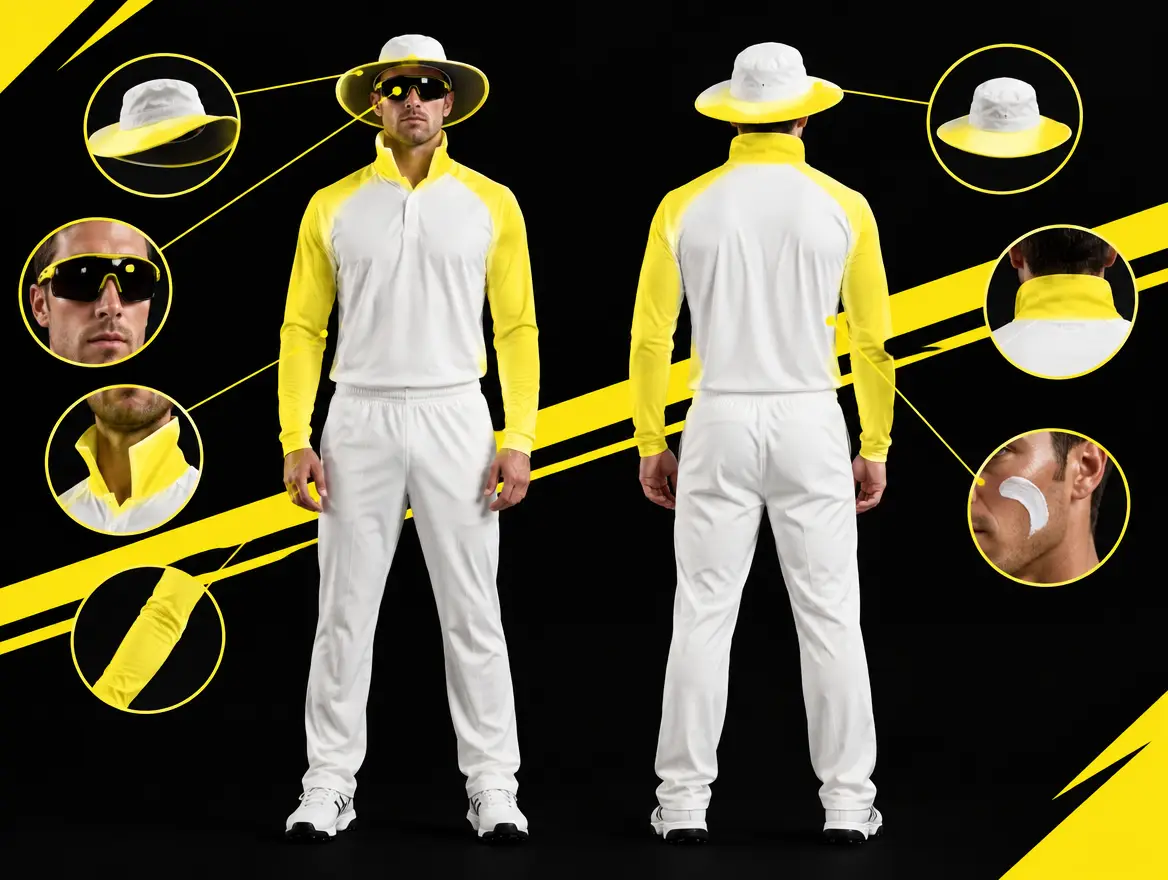
Sun protection in Australia means covering skin with fabric rather than relying on sunscreen alone. Choose long sleeves, a collar and a UPF 50+ rating tested to AS/NZS 4399, then add a broad-brimmed or legionnaire hat and sunglasses. Cancer Council recommends clothing that covers as much skin as possible whenever the UV index reaches 3 or above.
Long sleeves and collars
It sounds backwards, but a lightweight long-sleeve shirt can feel cooler than bare arms in direct sun, because the fabric shades the skin and wicks sweat. Many Australian players find a breathable long sleeve more comfortable by mid-afternoon than a short sleeve plus repeated sunscreen.
The collar matters just as much. The back of the neck is one of the most exposed areas for a fielder, and an upturned collar gives cover that a round-neck training tee cannot.
What UPF 50+ and AS/NZS 4399 actually mean
AS/NZS 4399 (commonly called AS 4399) is the Australian and New Zealand standard for evaluating and classifying sun protective clothing. A fabric rated UPF 50+ under that standard blocks around 98% of UV radiation. That is the highest category, and it is what you should look for on a label.
Two cautions. First, a UPF label only means something if the garment has actually been tested, so look for the standard referenced on the tag rather than a vague claim like "sun smart". Second, protection can drop when fabric is stretched, worn thin or wet, and cotton-rich whites in particular should not be assumed to carry a high rating unless labelled. If a garment has no rating, treat it as basic cover and add sunscreen to exposed skin.
Pairing clothing with hats
Clothing covers the torso and arms. Your hat covers the face, ears and neck. A baggy green style cap looks the part but leaves ears and neck exposed, which is why Cancer Council recommends broad-brimmed, legionnaire or bucket-style hats for sustained outdoor time. A batter's helmet peak helps with the face, but the back of the neck is still open.
A practical hot-weather setup for a fielder:
- Light, loose-weave long-sleeve shirt with a collar, ideally UPF-rated
- Wide-brimmed or legionnaire hat when not batting
- Sunscreen on hands, face and any exposed skin, reapplied through the day
- Sunglasses, and a spare shirt to rotate at the break
If you are comparing helmets alongside clothing, our Cricket Helmets Guide covers how headgear and sun cover work together.
How Should Cricket Clothing Fit by Level?
Cricket clothing should fit loosely enough to bat, bowl and field without pulling across the shoulders or thighs, but not so loose that it catches on pads, gloves or the ball. Allow room over thigh pads and at the waist, and for juniors, buy at most one size up.
Room for pads and movement
Trousers are the main fit issue. They sit under batting pads, so fabric that bunches behind the knee or gathers at the shin will rub and shift. A straight or slightly tapered leg with some stretch usually works best. If you wear a thigh pad or a hip guard, try the trousers on over them, or size with that in mind. Our Batting Pads Guide explains how pad fit interacts with what you wear underneath.
Shirts need freedom across the shoulders for bowling and throwing. Raise your arms fully when trying one on. If the hem lifts well above your waist, the cut is too short or too restrictive.
Fit priorities by level
- Junior and beginner: comfort, durability and sensible sizing matter more than cut.
- Grassroots club: breathable fabric and a reliable fit that survives weekly washing.
- Senior and representative: a tailored cut, better ventilation and consistent sizing across a squad.
Junior sizing: buying for growth without baggy kit
Parents rightly want a season out of a purchase. The problem is buying too big. Trousers that drag under the shoe can trip a child running between the wickets, and sleeves that hang past the wrist catch on gloves.
A more reliable approach:
- Measure height, chest, waist and inside leg rather than relying on age labels, because brands size differently.
- Check the retailer's size chart against those measurements.
- Go up one size at most, and prefer trousers with an adjustable or elasticated waist.
- Avoid rolling sleeves or trouser hems as a growth strategy. It looks untidy and rolling sleeves removes sun cover.
- Buy before the season starts, when sizes are available and a child's measurements are fresh.
If you are setting up a young player from scratch, our Cricket Sets and Junior Kits collection and Cricket Kit Bundles guide help you keep protective gear, clothing and a bag in proportion.
Training Wear Versus Match Wear: Where to Save and Where to Invest
Match your spend to how often and how long you wear each garment. Training wear can usually be durable and mid-range, since it wears out faster and takes rougher treatment. Match whites deserve more attention on breathability and sun cover, particularly for players who spend full days in the field every weekend.
Where to save
Training wear is the easy place to economise. Nets are shorter than matches, shade is often available, and kit takes knocks from balls, concrete and gravel. Durable polyester training tops and shorts or track pants in a mid-range price bracket do the job. Coloured tops also hide marks, which suits sessions where you will not be washing between uses.
Junior players, who outgrow clothing quickly, are another place to save. A handed-down or mid-range pair of trousers is usually enough for a child in their first or second season.
Where to invest
Spend more on the garments that work hardest in the sun. For a regular club player, that means a good long-sleeve shirt with a tested UPF rating and breathable fabric, and trousers that move well under pads. These are worn for the longest hours and the toughest conditions.
Players who train several times a week and play every weekend wear through kit faster, so durability becomes the better investment. Someone who plays a handful of social games a season does not need the same spec.
For cricket training wear in particular, think about washing and rotation. Two mid-range tops that you can alternate are often better than one expensive top you wash every night.
Club Cricket Teamwear: Consistency, Durability and Ordering for a Squad
Club teamwear works best when every player gets the same fabric, colours and logos, ordered in one batch with a size run that covers the whole squad. Choose durable polyester that holds colour through a season of washing, confirm sizing before ordering, and keep a record so replacement orders match.
Consistency
Colour can vary between production runs, which is why splitting an order across several batches or suppliers often leaves a squad looking mismatched. Order together where possible, and keep your artwork, colour references and sizes on file for top-ups.
Durability across a season
Teamwear is washed often and worn hard. Look for fabric that does not pill quickly, numbers and logos that are heat-pressed or sublimated rather than loosely applied, and seams that hold at stress points like shoulders and knees. For club cricket teamwear, durability usually matters more than fabric novelty.
Ordering sizes for a whole squad
- Collect measurements, or run a try-on session with sample sizes, before ordering.
- Separate junior and adult sizing, because they are not simply smaller versions of each other.
- Order a few spare sizes for late joiners and growing juniors.
- Allow lead time before round one, since printing and delivery can run into pre-season pressure.
In our experience supplying volunteer-run football clubs, the biggest drain on volunteers was sourcing equipment from several suppliers with inconsistent stock. Consolidating the order and simplifying repeat purchases reduced admin and improved turnaround in peak periods. Cricket clubs face the same problem, and the same fix applies. Our Cricket Kit Bags Guide is also worth a look if you are standardising bags alongside clothing.
The Mid-Range Rule: Why the Dearest Cricket Kit Is Rarely the Right Kit
For most grassroots players, mid-range clothing delivers nearly everything premium kit does, because the features that matter in Australian heat are fabric breathability, sun rating and fit. Premium pricing typically adds branding, marginal fabric refinements or professional-level cut. Those rarely change how a club player feels in the field.
This is my honest view after years of advising players, coaches, clubs and schools: the best product is the one that suits your actual level, use case and budget, not just the most expensive option.
Consider a hypothetical. A parent buys their eleven-year-old a full set of premium branded whites because "it's what the senior players wear". The child plays one game a week and trains casually. By mid-season, the trousers are too long, the shirt is a size too big and has no sun rating, and a growth spurt is on its way. A mid-range, correctly sized long-sleeve shirt with a tested UPF rating and a pair of adjustable trousers would have cost less and worked better. The premium garment solved a problem the child did not have.
The same logic applies to adults. A player who turns out every Saturday and fields for long stretches gets real value from a tested UPF shirt and breathable trousers. They get very little extra value from a top-tier label.
This is also how we approach premium cricket bats. Because every English Willow bat is slightly different, we share photos, weights and pickup feedback on shortlisted bats and guide customers by age, playing style and level. That process improved confidence on interstate online orders and reduced unsuitable purchases. Clothing deserves the same approach. Fast dispatch from Melbourne stock matters, but knowing which garment suits your level matters more.
Next step: Browse Highmark Cricket's clothing and club teamwear range, and if you are unsure about sizing or fabric, contact the team. We will give you honest advice matched to your level, your playing frequency and the conditions you play in, and we will tell you if you do not need the premium option.
References
- Cancer Council Australia, Sun safety and protecting yourself from UV
- Bureau of Meteorology, UV Index and sun protection times
- Standards Australia, AS/NZS 4399:2017 Sun protective clothing: Evaluation and classification
Frequently asked questions
What is the best fabric for cricket whites in hot weather?
Lightweight polyester or a moisture-wicking blend is generally the best choice for hot Australian conditions. It moves sweat away from the skin and dries quickly. Check that the fabric is opaque when dry, and look for a tested UPF rating if you want reliable sun protection.
Do cricket whites have to be cotton?
No. Most clubs and associations accept polyester and blended fabrics, provided the colour is white or cream as required. Rules vary by competition, so check with your club or association if you are unsure, particularly for junior competitions and representative cricket.
What does UPF 50+ mean on cricket clothing?
UPF 50+ is the highest sun protection category under AS/NZS 4399. Fabric with this rating blocks around 98% of UV radiation. It only applies to tested garments, and protection can reduce if fabric is stretched, worn thin or wet, so you should still wear a hat and sunscreen on exposed skin.
How should junior cricket clothing fit?
Junior clothing should fit comfortably with enough room to move, sized up by one size at most. Trousers should not drag under the shoe and sleeves should not hang past the wrist. Measure height, chest, waist and inside leg, then check them against the retailer's size chart, since sizing varies between brands.
Is expensive cricket clothing worth it?
Sometimes, but not for everyone. A player who spends full days in the field every weekend benefits from a tested UPF shirt and breathable, well-cut trousers. A junior or occasional player usually gets better value from a durable, correctly sized mid-range garment than from a premium one.
