




Cricket Bat Weight Guide: How to Choose the Right Bat Weight for Your Age, Level and Batting Style

Choosing a cricket bat weight? Learn dead weight vs pick up, typical weights by size, junior advice and English vs Kashmir Willow, from Highmark Cricket.
Most adult club cricketers should choose a Short Handle bat of about 2lb 7oz to 2lb 12oz (roughly 1.1 to 1.25kg), but the right weight is the heaviest bat you can swing on time and under control. Pick up (balance) matters as much as the number on the label, and heavier is not better.
Every week we speak with players, parents and coaches who have been told that a heavier bat means more power. It does not. A bat that is too heavy arrives late, changes your technique and, for juniors, can put strain on growing bodies. This guide explains what the numbers on a product page really mean, how weight varies by size, style and willow, and how to avoid ordering the wrong bat online.
The advice here comes from real-world use and the questions we field every day at Highmark Cricket. It is aimed at Australian club and grassroots cricketers, parents buying junior bats, and players moving from Kashmir Willow to English Willow.
Key Takeaways
- Dead weight is what the scales say. Pick up is how the bat feels in motion. Pick up is the better predictor of how a bat will play.
- Adult Short Handle bats typically sit around 2lb 7oz to 2lb 12oz (roughly 1.1 to 1.25kg), but this varies by brand and by individual blade.
- Choose size by height first, then choose weight within that size. Never buy a junior bat to grow into.
- Kashmir Willow is usually denser and heavier than English Willow, so do not assume the same weight will feel the same after you upgrade.
- A late bat, a dominant top hand and dropping hands are the clearest signs a bat is too heavy.
- Bat speed is built through training, not by buying extra weight. The best bat is suited to your level and playing style, not just the most expensive option.
Summary Table: How the Main Factors Affect Bat Weight
| Factor | What it tells you | What to check before buying |
|---|---|---|
| Dead weight | The mass of the bat on the scales | The listed weight of the exact bat, not a generic range |
| Pick up | How heavy the bat feels when lifted and swung | Ask for pick up feedback, or shadow bat in a stance |
| Size (height) | Whether the bat fits your frame | The brand's size chart and handle length |
| Willow type | Typical density and feel | Kashmir is usually heavier, English Willow usually lighter |
| Grade | Grain appearance and selection quality | Grade does not set weight, so check each bat |
| Batting style | How much weight you can control and still hit with power | Your usual shots, your role and your timing |
What is the difference between dead weight and pick up?
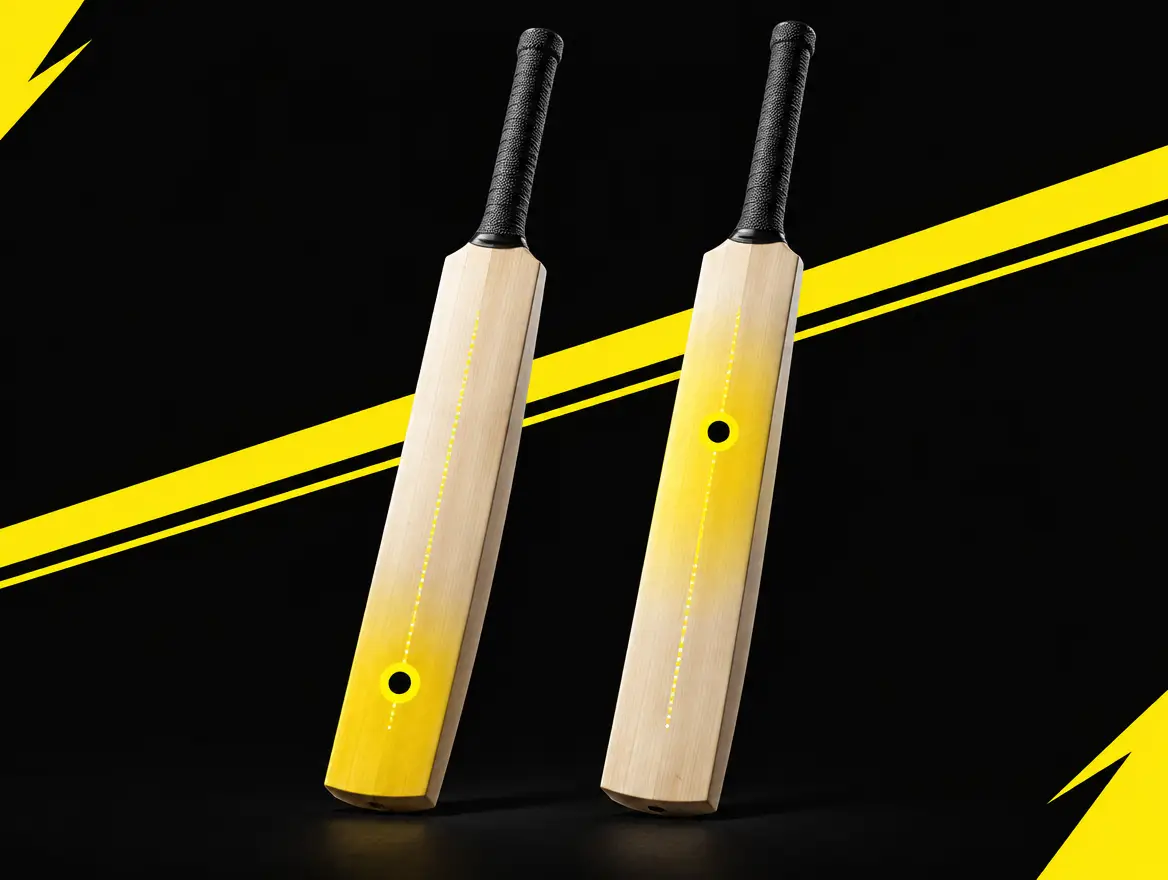
Dead weight is what the bat weighs on the scales. Pick up is how heavy it feels when you lift and swing it, which depends on where the mass sits along the blade. Two bats of identical weight can feel quite different, so pick up is the better guide to how a bat will play.
Product pages list dead weight in ounces, pounds or grams. It is useful, but it is only one number. It tells you nothing about where that weight sits.
Consider two bats that both weigh the same. In the first, the mass is concentrated low in the blade with a low middle. It swings like a heavier bat because more weight is further from your hands. In the second, the profile is spread through the middle and the shoulders, with the sweet spot higher. It feels light and quick through the ball. On paper they match. In the nets they do not.
That is why a well-balanced bat can feel lighter than a lighter bat with a low sweet spot. A bat with a slightly higher dead weight but a balanced profile is often easier to control than a lighter bat that feels bottom-heavy.
It also helps to know that the Laws of Cricket (Law 5, the bat) set limits on dimensions such as length and width. They do not set a weight limit. Makers are free to produce bats of any weight within those dimensions, which is why two bats of the same size can differ so much.
How to judge pick up
- Hold the bat in your batting stance and lift it to your normal backlift. Does it rise easily, or do you have to muscle it?
- Shadow bat a few drives and pulls. Notice whether your hands stay in front of your body or drift.
- Pay attention to how the bat feels after several minutes, not just the first lift. Fatigue exposes a bat that is too heavy.
- If you are shopping online, ask for pick up feedback on the specific bat. Describing it as light, medium or heavy tells you far more than weight alone.
What weight cricket bat should I use for my size?
Choose size by height first, then weight within that size. Adult Short Handle bats typically run from about 2lb 7oz to 2lb 12oz (roughly 1.1 to 1.25kg). Junior bats are lighter and scale with size, but figures vary by brand, so always check the specific bat's listed weight.
Source: Highmark Cricket's own typical range for adult Short Handle bats (the only figures in this table). All other weights vary by brand and by individual blade, so check the product page.
| Bat size | Who it generally suits | Typical weight guidance |
|---|---|---|
| Junior sizes (Size 1 to Size 6, Harrow) | Players matched by height, from beginners to young teens | Lighter, scaling up with size. Varies by brand |
| Short Handle (adult) | Most adult club players, including taller teens | About 2lb 7oz to 2lb 12oz (roughly 1.1 to 1.25kg) |
| Long Handle (adult) | Taller adults who want extra reach | Can run slightly heavier. Check the listed weight |
Treat these as typical ranges, not rules. Brands cut and shape willow differently, and every blade is slightly different in grain structure and weight distribution. A Short Handle at the lighter end of the range suits a smaller or less physically strong adult. A bat at the heavier end suits a strong player with a confident, flowing swing.
A Long Handle is not automatically better for a tall player. It adds length, and length changes how the weight feels. If you are between a Short Handle and Long Handle, pick up should decide it.
Junior cricket bat weight
For juniors, fit comes before everything. A junior bat should match the player's height and strength today, not the height they might reach in two seasons. Brand size charts differ, so use the chart for the specific bat. As a rough fit check, stand with the bat beside you and the toe on the ground. The top of the handle should sit around the thigh or waist, depending on the brand's chart.
The temptation is to buy up. Parents see growth ahead and want to avoid replacing the bat. The problem is that an oversized, heavier bat forces a young player to change their grip, drop their hands or swing around their body. Those habits are hard to undo.
A junior who is struggling to lift the bat in a basic stance needs a lighter bat or a smaller size. A junior who can swing it freely, play straight and keep their head still is in the right place.
Some juniors do move between sizes quickly. If your child is on the border between two sizes, ask the retailer to compare the actual pick up of both. Many junior bats are lighter in the hands than their weight suggests, but you will only know by asking. For beginners, a well-priced starter bat from a trusted brand is usually better value than a premium senior-grade bat they cannot yet control.
How does batting style affect the right bat weight?
Style decides how much weight you can use well. Front-foot drivers often like mass low in the blade for drive power, while back-foot cutters and pullers need quick hands and a lighter-feeling pick up. Openers lean towards control, and T20 hitters towards a big profile that still swings fast.
Front-foot drivers versus back-foot players
If your scoring comes from straight drives and cover drives, a bat with a lower middle can add drive power and carry through the shot. The trade-off is that low-middle bats can feel heavier and slower to get into position, so your timing has to be reliable.
If you score square of the wicket with cuts, pulls and horizontal-bat shots, your hands need to move quickly and late. A bat with a balanced or higher middle suits that style. It can be picked up fast for the short ball and still hit through the line.
Openers, middle order and T20 hitters
Openers face the new ball and spend long periods at the crease. Control and the ability to get the bat down quickly matter more than raw weight. A bat that is still comfortable in the second hour of an innings beats one that felt impressive for ten minutes.
Middle-order players and finishers often want a bat that can generate power quickly. In T20, big profiles are popular, but a big profile does not have to mean a heavy bat. A well-shaped, lighter-feeling bat can still deliver power if you can swing it fast.
Bat speed and control
Power comes from the speed of the bat at contact, not from dead weight alone. A heavier bat that you swing a fraction slower can send the ball shorter than a lighter bat swung on time. If you are hitting the ball late, you are hitting it weaker.
Control matters just as much. A bat you can manage lets you leave, defend, rotate the strike and play late. A bat that dominates you takes those options away. This is why we say heavier is not better. The right weight is the one that lets you play your normal game with a straight bat.
Does English Willow weigh less than Kashmir Willow?
Usually, yes, for a bat of the same size. Kashmir Willow tends to be denser and heavier, so it can feel thicker and less lively. English Willow is generally softer and lighter, which lets makers produce bigger profiles at manageable weights. Grade affects grain and feel, but weight still varies bat to bat.
This matters most if you are upgrading. Many players move from a Kashmir Willow bat to their first English Willow bat and order the same weight they were used to. The English Willow bat may then feel livelier and swing faster, or it may have a bigger profile than expected. The weight number looks familiar, but the bat behaves differently.
If you are making that move, do not simply match the old weight. Think about the pick up you liked on your Kashmir bat and ask for a comparison on a shortlist of English Willow bats.
How grade affects weight and feel
Grade is primarily a measure of grain, appearance and selection. Higher grades generally have cleaner, straighter grain with fewer blemishes. Some makers also select higher grades for performance. Grade does not mean heavier, and it does not mean better for your game.
This is a good example of where the most expensive option is not necessarily the right one. A mid-grade English Willow bat with the right pick up and a sound blade often gives a club cricketer better value than a premium-grade bat that is too heavy or too big. Quality, durability and value matter more than grade for most grassroots players.
Willow is a natural material, so there is no standard weight for a grade. Moisture can shift weight slightly, and every blade is different. That is why the listed weight of the exact bat matters more than a generic range.
What are the warning signs a cricket bat is too heavy?
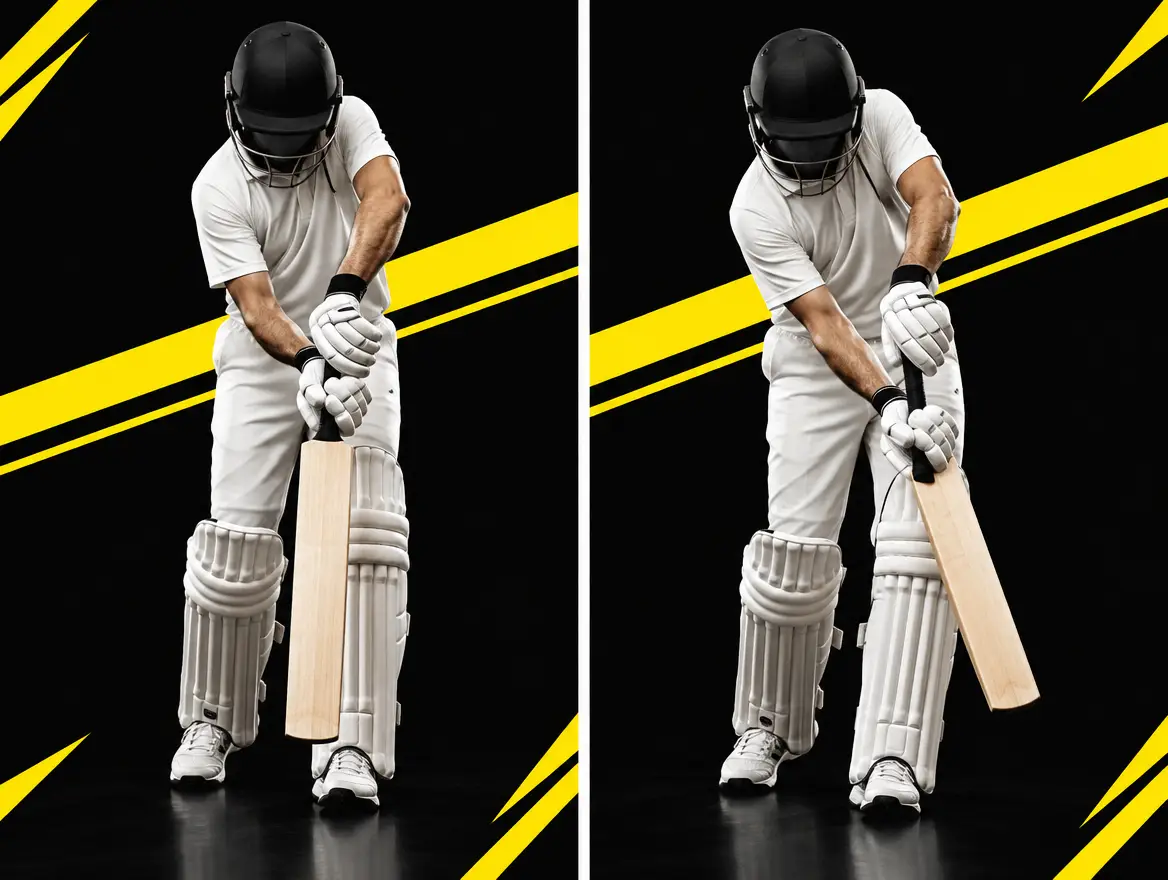
A bat is too heavy when you cannot get it into position on time without changing your technique. Watch for a late bat, a dominant top hand, dropping hands, a backlift that dips, and tired shoulders or wrists after a short net. For juniors, physical strain is the bigger concern.
- A late bat. You are playing the ball after it has passed the ideal contact point. Defensive shots get squeezed out off the inside edge, and drives lose timing.
- The top hand dominating. The bottom hand cannot control the bat, so the top hand drags it through. Shots become flat and wristy, and the bat comes across the line.
- Dropping the hands. The handle drops towards your body during the backlift or as the ball arrives, because the bat is pulling you down.
- Backlift that wobbles or flattens. The bat is hard to hold still at the top, so it wanders or loops.
- Rapid fatigue. Your shoulders, forearms or lower back ache early in a session, and your technique deteriorates as you tire.
For juniors, these signs matter more. A young player who adapts to a heavy bat will often change their grip, stance or swing path to cope. Persistent strain can also cause discomfort in the wrists, shoulders and back. If a junior complains of soreness after batting, take it seriously and speak to a coach or health professional. Sports Medicine Australia provides general injury prevention resources for community sport.
A simple test: shadow bat for a few minutes, then play a short net with throwdowns. If your technique falls apart as you tire, the bat is too heavy for now.
Can you build bat speed instead of buying a heavier bat?
Yes. Bat speed comes from technique, strength and repetition, not from a heavier bat. Net sessions, throwdowns and bowling machine work at suitable speeds build timing, while basic strength work helps older players. Move up in weight only when your timing stays intact.
A heavier bat will not teach you to hit harder. If anything, it slows you down and tempts you into bad habits. Players who want more power usually get more from time in the nets than from a different bat.
A bowling machine is excellent for this because it gives you repeated, consistent deliveries to groove your swing. Set it at a pace you can handle, focus on getting your bat down on time and then increase the challenge. Training equipment in the nets, along with regular throwdowns from a coach or parent, builds the timing and strength you need. If you do want to step up in weight later, do it gradually and check your technique holds.
Grip and equipment also affect how a bat feels in the hands. Handle grips and the thickness of your gloves change how the bat sits in your hands, so factor them in when judging pick up. Brands such as Kookaburra shape their blades differently, so do not assume one brand's weight feels the same as another's.
What should you check before buying a cricket bat online?
Before you order online, know your height and level, check the exact listed weight in grams or ounces, ask about pick up and sweet spot, confirm handle length and willow type, and request photos. If anything is unclear, ask the retailer before you buy rather than after the bat arrives.
- Know your size. Use the brand's size chart and your height. Do not buy up.
- Check the listed weight. Look for the actual weight of the exact bat, in grams or ounces, not a generic range for the model.
- Ask about pick up. Request feedback: light, medium or heavy, and where the sweet spot sits.
- Confirm handle length. Short Handle or Long Handle changes how the weight feels.
- Check willow type and grade. Remember that Kashmir is usually heavier than English Willow and that grade does not set weight.
- Think about your role. Opener, middle order, T20 hitter or junior learner? Weight should suit your level and playing style.
- Ask for photos. Grain, edges and profile vary between bats of the same model.
- Check the support. Look for a retailer that will answer questions and help you buy confidently.
Why the weight on the label is the least useful number
The label weight is the least useful number because it hides what matters: balance, profile and the player's own timing. In our experience, the best result comes from matching a specific bat to a specific player, not from chasing a heavier or pricier option. Honest advice prevents more bad purchases than any discount.
One of the biggest problems with buying a premium English Willow bat online is that every bat is slightly different in grain structure, weight distribution and pick up. Many customers were understandably hesitant to spend serious money without seeing the bat. To solve this, we introduced a personalised bat selection process. We share photos, weights and pickup feedback on shortlisted bats and guide the customer based on age, playing style and level of cricket.
The outcome has been clear. Customer confidence improved significantly, particularly for interstate online orders. We saw fewer unsuitable purchases, and a high volume of repeat customers and referrals for premium bats. We did not achieve this with the lowest price or the fastest shipping alone. Fast dispatch from Melbourne stock matters, but long-term trust is built through product knowledge, honest advice and reliable support.
A scenario every retailer will recognise
Consider a parent buying for a growing junior. They have found a heavy, senior-grade bat and they are tempted. It looks impressive, the price reflects the grade, and they think the child will grow into it. The sensible advice is to say no, kindly. The child is better served by a lighter, correctly sized bat they can control now. A well-chosen mid-range junior bat will build good technique and confidence, and the parent will not spend premium money on a bat that is too heavy for two seasons.
That conversation costs us a bigger sale today. It also builds a customer who comes back for the next size, recommends us to others at the club and trusts what we say. That matters more than any single order, especially in grassroots sport where everyone talks.
Get personalised weight advice before you buy
If you are unsure, ask before you order. Browse Highmark Cricket's bats filtered by size and willow type, shortlist two or three, then contact the team. We will share photos, listed weights and pick up feedback, and give practical buying advice suited to your level and playing style.
Whether you are a parent choosing a first English Willow bat, a club player upgrading from Kashmir, or a coach advising a squad, the process is the same. Match the bat to the player, not to the price tag. Players, coaches, clubs and schools all get better value when the bat fits.
References
- MCC, The Laws of Cricket (Law 5: The bat)
- Cricket Australia, official website
- Sports Medicine Australia, official website
Frequently asked questions
What weight cricket bat should I use?
Most adult club players use a Short Handle bat of about 2lb 7oz to 2lb 12oz (roughly 1.1 to 1.25kg). The right weight for you is the heaviest bat you can swing on time and under control. Pick up, your strength and your batting style all matter.
Is a heavier cricket bat better?
No. A heavier bat can add power only if you can swing it fast and on time. If it makes you late, drop your hands or let your top hand dominate, it will hurt your batting. Match the bat to your strength and technique, not the biggest number.
What is the difference between pick up and dead weight in a cricket bat?
Dead weight is the bat's mass on the scales. Pick up is how heavy it feels when you lift and swing it, which depends on where the weight sits in the blade. A balanced bat can feel lighter than a bat with a lower sweet spot, even if it weighs slightly more.
How heavy should a junior cricket bat be?
There is no single figure, because junior bat weights vary by brand and size. Choose by height first, then check the listed weight of the exact bat. A junior should be able to lift it in a stance, keep their hands in front of the body and play straight without strain.
Is English Willow lighter than Kashmir Willow?
Usually, yes. Kashmir Willow tends to be denser and heavier, while English Willow is generally lighter and softer. That means a bat of the same size and weight can feel different after you upgrade. Compare the pick up of specific bats rather than matching your old weight.
