




Best Cricket Bats in Australia: How to Choose the Right Bat for Your Level, Conditions and Budget

Choosing the best cricket bat in Australia? Compare English vs Kashmir willow, grades, sizes and turf vs synthetic with honest advice from Highmark Cricket.
The best cricket bat in Australia is the one that suits your level, playing surface and budget, not the most expensive one. Juniors and club players usually get the best value from a mid-grade English willow bat, while backyard and synthetic play suits a durable Kashmir willow bat. Size and pick-up matter more than brand.
Search for the best cricket bats in Australia and you will mostly find lists that rank the priciest bats first. That is easy to write and hard to buy from. A parent shopping for a first English willow bat and a senior batter facing quick bowling on a turf wicket are solving different problems.
This guide is a decision guide, not a leaderboard. It walks through willow type, grades, player type, surface, size and care, so you can narrow the field before you spend. We stock Kookaburra, SS/Ton, SG, GM, DSC, CA, MRF, Southern Cross and Stanford, so the brand pointers below stick to those ranges.
Key Takeaways
- Level, surface, format and budget should decide your bat before brand does.
- English willow is for hard leather ball cricket. Kashmir willow suits tennis ball, backyard and casual play.
- Grades describe the look and selection of the willow. They do not guarantee a proportional jump in performance, which is why mid-grade bats often give the best value.
- Juniors outgrow bats quickly, so a top-grade junior bat is rarely good value.
- Correct size and pick-up beat sticker price. A bat you cannot control late is the wrong bat, whatever it cost.
- Knocking in, oiling and matching the bat to the right ball decide how long it lasts.
Summary: Which Bat Suits Which Player?
| Player type | Usual willow | Usual grade | What to prioritise |
|---|---|---|---|
| Junior, first leather ball bat | English willow | Entry to mid grade | Correct size, light pick-up, value as they grow |
| Junior or beginner, tennis ball | Kashmir willow | Not usually graded | Durability and correct size |
| Grassroots club player | English willow | Mid grade | Balance, pick-up and suitability to your wickets |
| Senior turf batter | English willow | Mid to upper grade | Profile, weight distribution, consistency |
| Backyard, synthetic or concrete | Kashmir willow | Not usually graded | Toughness and low cost |
What Does "Best Cricket Bat" Really Mean?
The best cricket bat is the one that fits your level, the surface you play on, the format you play and your budget. Brand and sticker price come after those four. A bat that suits a school junior will differ from one for a senior turf batter, even when both come from the same maker.
Here is how I weigh each filter when someone asks us for advice.
Level. How often do you play, and against what? A player who bats once a week in a junior competition does not need the same bat as someone playing multiple senior games every weekend. Better willow rewards a player who finds the middle consistently. It does not fix a technique problem.
Surface. Turf, matting, synthetic, concrete and indoor surfaces all treat a bat differently. A concrete driveway will punish a bat that was built for a hard leather ball on grass.
Format. Some players want a bat that moves quickly through the shot, others want control to play late. That preference is as important as grade.
Budget. Spend where it changes your cricket. For most players that is the right size and a reasonable grade of English willow, not the very top of the range.
This is the core of how we approach it at Highmark. Good retailers should simplify the choice and give practical buying advice based on real-world use, not just push the most expensive option. We work with players, coaches, clubs and schools every day, and the same mistakes come up again and again: buying too big, buying too premium, and using the wrong bat with the wrong ball.
English Willow vs Kashmir Willow: Which One Do You Need?
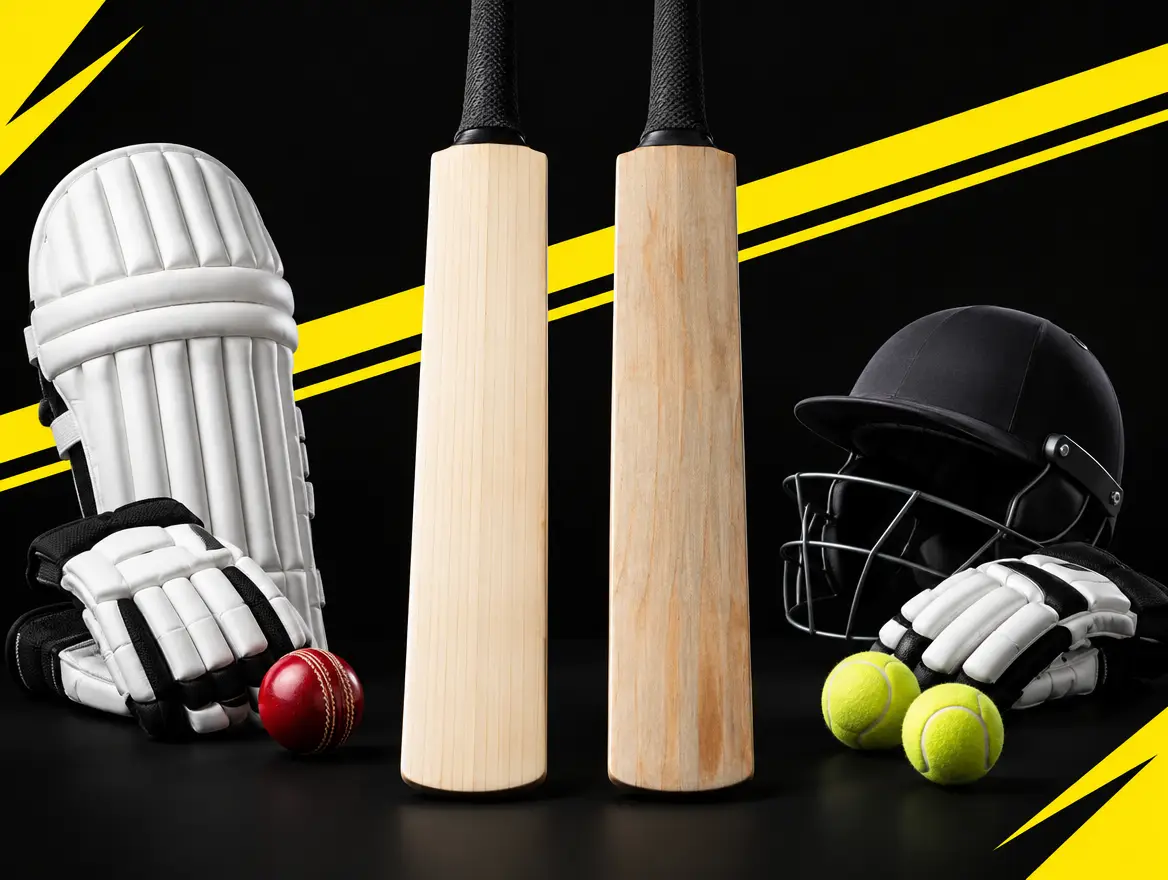
English willow is lighter, softer and more responsive, which makes it the right choice for hard leather ball cricket on turf or matting. Kashmir willow is denser, heavier and tougher, which suits tennis ball, backyard and casual play. Kashmir is not a cheaper version of English willow. It is a different tool for a different job.
When English willow makes sense
English willow is the standard for organised cricket with a leather ball. It is a relatively soft wood, which gives the blade its pace off the bat for a given weight. The trade-off is that it marks and wears. Seam impressions, small cracks along the edges and dents are normal over a season, and they are why preparation matters.
Choose English willow if you or your child play in a club, school or association competition with a leather ball, or you plan to progress to that level. It also makes sense for serious training with a leather ball.
When Kashmir willow makes sense
Kashmir willow is a harder, heavier, denser wood. For the same size, a Kashmir bat generally picks up heavier and has a less lively feel. That is not a flaw if you are playing tennis ball cricket, indoor sessions with a soft ball or backyard games, where toughness matters more than ping.
It is a good fit for a child's first bat before they are ready for a leather ball, for the family bat that lives in the garage, and for bowling machine or tennis ball training where you do not want to damage a good bat. Kashmir bats are typically not graded in the way English willow bats are.
Australian hard, bouncy wickets and synthetic play
Australian wickets, especially quicker turf pitches, bring the ball through at a height and pace that stress a bat's edges and toe. That is one reason English willow bats get seam marks and edge damage if they are not prepared properly. A well-prepared English willow bat from a trusted brand handles that environment. An unprepared one does not.
Synthetic and concrete surfaces are a different story. Hard surfaces throw the ball through quickly and accelerate wear on the toe. If most of your cricket is on synthetic or concrete, especially with a tennis ball, a tough Kashmir willow bat is usually the sensible choice. Save the English willow for turf or matting where the bat was designed to live.
If you play across both, own two bats. A Kashmir bat for casual and backyard use costs far less than repairing a good English willow bat that spent a summer on concrete.
Cricket Bat Grades Explained
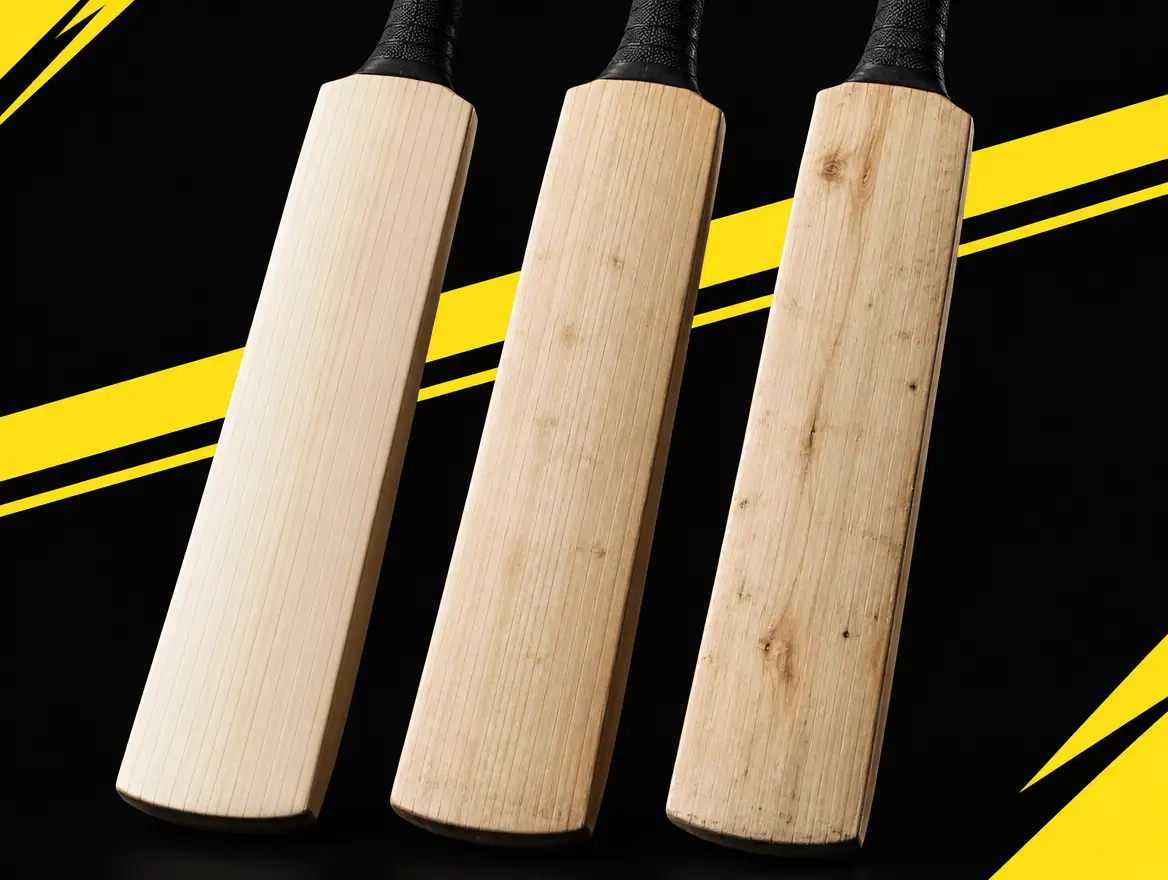
Grades rank the visual quality of English willow, not a guaranteed performance level. A higher grade generally means straighter, more even grain and fewer blemishes. Because much of what separates grades is cosmetic, a mid-grade bat often delivers the best value for juniors and club players.
Bat makers usually grade English willow from grade 1 down to grade 5, though naming varies by brand. Some use labels such as Players, Select or Premium instead, and there is no single universal standard. Treat grades as a guide within a brand, not an exact comparison across brands.
What grading criteria usually look at
The general willow grading criteria are consistent across the industry:
- Grain straightness. Straight grain running evenly from the toe to the shoulder is prized. Crooked or runout grain scores lower.
- Grain count and evenness. Tighter, more even grain across the face grades higher. Wide, uneven grain often grades lower.
- Blemishes. Knots, red streaks, butterfly stain and other marks reduce the grade. Most are cosmetic.
What grade changes and what stays the same
A higher grade does often come with better-selected willow, cleaner presentation and, at the top end, more careful selection for weight and pick-up. Some players genuinely feel a difference in how the bat comes off the blade.
What stays the same is the species. A lower-grade English willow bat is still English willow, pressed and shaped with the same fundamentals. A blemished face does not mean a weak bat. The right profile, balance and weight for you will affect your batting more than the difference between two adjacent grades.
| Tier | What you typically get | Who it suits |
|---|---|---|
| Top grade | Cleanest grain, fewest blemishes, careful selection | Frequent senior players who know their preferred pick-up |
| Mid grade | Good willow with some visible marks or less even grain | Juniors moving to leather ball and grassroots club players |
| Entry grade | More blemishes and wider grain, same English willow | Beginners, growing juniors and budget-conscious buyers |
This is why we tell most club players and juniors to look at mid-grade first. You pay noticeably less than the top tier, you get genuine English willow, and the performance gap for most players is smaller than the price gap. Top grade makes sense when you bat often enough, and consistently enough, to use what you are paying for.
Best Cricket Bats by Player Type
The right bat range depends on who is holding it. Juniors need the correct size and value as they grow. Club players need balance and a mid-grade English willow. Senior turf batters can justify upper grades. Backyard players need toughness. Below, each type is paired with brand ranges we stock, rather than one supposed winner.
Junior first bat
Junior bats progress through a numbered size range, starting at size 1 and moving up through to size 6, then Harrow, then short handle for older teens and adults. Use the brand's size chart, because sizing varies a little between makers.
The common mistake is buying up a size so the child will grow into it. A bat that is too big or heavy changes their technique, and they start swinging across the line to compensate. For a first English willow bat, an entry or mid-grade bat in the correct size is almost always the better buy. Children outgrow bats quickly, so paying for top-grade willow on a junior bat rarely makes sense.
Start with the junior ranges from Kookaburra, GM, SG, DSC and Stanford, and look at our junior starter kits if your child also needs pads, gloves and a helmet. If they are only playing with a tennis ball, a Kashmir willow junior bat is the cheaper, tougher option.
Grassroots club player
If you play club or association cricket most weekends, mid-grade English willow is the sweet spot. You get quality willow, a reliable finish and a price that leaves room for gloves, pads and a spare ball or two.
Browse the mid-range English willow from Kookaburra, GM, SG, DSC, CA and MRF, and focus on balance and pick-up for the wickets you play on. Grassroots sport runs on volunteers and family budgets, and a durable, well-suited bat is better value than a premium bat that sits at the top of your wish list.
Senior turf batter
If you bat regularly on turf, face genuine pace and know what pick-up and profile suit you, upper-grade English willow can be justified. You will notice better selection, and you will probably be fussy about the balance anyway.
Look at the premium English willow from Kookaburra, SS/Ton, GM, MRF and SG. Do not buy purely on grade. Compare two or three bats within the same grade, because every piece of willow is slightly different in weight distribution and pick-up. That is where good advice earns its place, and we will come back to it below.
Backyard or training bat
For the backyard, the driveway, the park and the tennis ball session, buy toughness. A Kashmir willow bat from the Stanford, Southern Cross and other budget-friendly ranges will handle abuse that would wreck an English willow bat. Check current availability by brand, as ranges change.
If you are on a tight budget, our clearance and sale bats are the place to look. Last season's stock and end-of-line bats can offer excellent quality, durability and value. Just check the willow type, grade and size before you buy.
What Is the Best Cricket Bat for Turf Wickets?
For Australian turf wickets, choose English willow with a profile and balance that let you play the bouncing ball comfortably. That usually means a solid spine, decent edges, a middle that is not too low and a weight you can control late. Heavy bats with a very low middle can be awkward against bounce.
This is a matter of general principle, not a rule. Pitches vary hugely between a country turf wicket and a suburban club ground, and batting styles vary even more. These are the questions we ask turf players:
- Where do you score? Players who play off the front foot against seam bowling and players who play off the back foot against bounce often want different weight distribution.
- Can you play late? A bat that feels fine in the shop but heavy by the end of an innings is the wrong weight.
- What do you do with your hands? Handle shape and thickness change how the bat feels in the hand, and a comfortable grip reduces fatigue.
It is also worth remembering that quicker, bouncier pitches expose edges and toes. A well-prepared bat from a trusted brand, knocked in properly, will hold up much better than a rushed one.
Does Brand Matter When Choosing a Cricket Bat?
Brand matters less than grade, size, balance and how the bat has been prepared. Reputable brands give you consistent quality control, clear sizing, after-sales support and a track record. But two bats from the same brand can feel completely different in the hand, so the individual bat matters more than the logo.
When people ask about cricket bat brands in Australia, they are often asking whether a famous name guarantees a better bat. It does not. What it usually gives you is consistency and support. Kookaburra is a long-established Australian name with strong availability here. SS/Ton, SG, GM, DSC, CA and MRF all have loyal followings, and Southern Cross and Stanford are worth a look for value. Think of each brand as a range of options, not a ranking.
A practical point on faults. Under the Australian Consumer Law, products must generally be of acceptable quality and free from defects, and the ACCC publishes guidance on consumer guarantees. A manufacturing fault is a different matter from damage caused by using the wrong ball, skipping preparation or leaving a bat in a hot car. Knowing the difference is part of buying confidently.
How Much Should You Spend on a Cricket Bat?
Spend enough to get the right willow and size for your level, then stop. For most juniors and club players, that means mid-grade English willow. Extra spend on top grade is worth it only if you play often and can feel the difference. Money saved is better spent on protective gear.
Three rules we use:
- Do not pay for grade you will not use. If you play a handful of junior games a season, you will not benefit from the top tier.
- Do not skimp on size. A cheaper bat in the wrong size is worse value than a fairly priced bat that fits.
- Budget for the extras. A good grip, a bit of oil, a bat mallet and the right ball all matter. So do gloves, and our Batting Gloves Guide covers how to choose a pair that fits properly.
Size, Pick-Up and Handedness: A Quick Check
Check three things before you buy: the size matches the player's height and strength, the pick-up feels balanced rather than heavy at the toe, and the bat is the right hand for your stance. A bat that fails any of these will hold you back, whatever the grade.
Size. Use the manufacturer's size chart, and follow the junior size progression through to Harrow and short handle. If your child sits between two sizes, ask for advice, because the answer depends on their strength as well as height.
Pick-up. Two bats with the same sticker weight can feel very different because of where the wood sits. Pick the bat up, hold a playing stance and see whether you can swing it and stop it without effort. Our Cricket Bat Weight Guide goes through weight and balance in detail, so I will not repeat it here.
Handedness. Buy a bat that matches your batting stance, not necessarily the hand you write with. If you are unsure, ask before ordering.
One more point: the Laws of Cricket, specifically Law 5, set the maximum dimensions of a bat and require the blade to be made of wood, so a reputable adult bat is legal in any competition.
Getting the Most From Your Bat: Knocking In, Oiling and the Right Ball
A new English willow bat needs preparation before it faces a hard cricket ball. That means light oiling, careful knocking in with a bat mallet and a sensible match between bat and ball. Skip this and a good bat can crack, dent or split in its first few sessions.
Knocking in
Knocking in compresses the surface fibres of the willow so the bat can absorb the impact of a hard ball. Use a proper cricket bat mallet and work across the face, edges and toe with gradually increasing force. Allow plenty of time over several sessions, and follow the manufacturer's guidance. Rushing this step is the most common reason bats get damaged early.
Oiling
Apply a thin coat of raw linseed oil to the face, edges and toe, and let it soak in. More is not better. Too much oil makes the bat heavy and dead. Keep oil off the splice and handle, and do not oil a bat repeatedly during the season.
Matching the bat to the ball
The ball matters as much as the bat. A new English willow bat should work up from softer impacts, such as old balls, to harder ones. If you are unsure which ball suits your age group and format, our Cricket Balls Buying Guide explains the differences.
A Kashmir willow bat or a junior bat should not be used with a hard leather ball before it has been properly prepared. Kashmir willow is not designed for the same impact, and an unprepared junior bat can split or crack quickly. For Kashmir bats, the usual use is tennis ball and soft ball cricket, and you should check the maker's guidance before using one with a leather ball at all.
Store your bat out of extreme heat and damp, and avoid leaving it in a car boot over summer. Keep it away from wet grass and concrete floors where possible.
What We Have Learned Matching Bats to Players
The most useful thing we have learned is that buying a bat is a suitability problem, not a price problem. Every English willow bat is slightly different in grain structure, weight distribution and pick-up, and customers who cannot hold the bat first are right to hesitate.
That hesitation was real for our online and interstate customers, so we built a personalised selection process. We share photos, weights and pick-up feedback on a shortlist of bats, and we guide customers based on age, playing style and level of cricket. The result was better confidence on interstate orders, fewer unsuitable purchases and a lot of repeat customers and referrals for premium bats.
Here is the kind of conversation that process produces. Consider a parent buying for a teenager moving from junior cricket into senior club cricket, who has set their heart on a top-grade bat because it is the best money can buy. When we ask how often the player bats and what wickets they face, the answer is a few games a week on suburban turf. A mid-grade English willow bat, chosen for the right pick-up, is the better match. It leaves money for gloves and a spare bat, and the player is unlikely to feel the difference in the grade. That is a smaller sale on the day and a customer who comes back.
I hold a position here that goes against much of the industry. Fast dispatch matters, and we dispatch quickly from Melbourne stock. But long-term trust is built through product knowledge, honest advice and reliable support, not just fast shipping or discounts. If a customer does not need the premium option, we will say so. Good advice helps customers buy confidently and keeps people playing grassroots sport for longer.
Ready to choose? Browse the Highmark Cricket bat range by willow, grade and size, and contact the team for honest, level-appropriate advice before you buy. If you are watching your budget, start with the clearance bats.
References
- MCC, Laws of Cricket (including Law 5, The Bat)
- ACCC, Consumer guarantees
- Cricket Australia, Official site
Frequently asked questions
Is English willow or Kashmir willow better?
Neither is better in general. English willow is better for hard leather ball cricket because it is lighter and more responsive. Kashmir willow is better for tennis ball, backyard and casual play because it is denser and tougher. Choose based on the ball and surface you use most.
What grade of cricket bat should I buy?
Most juniors and club players get the best value from a mid-grade English willow bat. Grades mainly reflect grain straightness, grain evenness and blemishes. Top grade makes sense if you play often and can feel the difference in pick-up and selection, but it is rarely essential.
What is the best junior cricket bat?
The best junior bat is the correct size, with a pick-up the child can control. For a first leather ball bat, an entry or mid-grade English willow bat is usually best value. For tennis ball cricket, a Kashmir willow junior bat is tougher and cheaper.
Can I use a Kashmir willow bat with a cricket ball?
Kashmir willow bats are mainly designed for tennis ball and soft ball play. Using one with a hard leather ball, especially before preparation, risks cracking or splitting. Check the manufacturer's guidance, and use an English willow bat for regular leather ball cricket.
Do I need to knock in a new cricket bat?
Yes, for English willow. Knocking in compresses the fibres so the bat can handle a hard ball without cracking. Use a bat mallet, apply a thin coat of raw linseed oil and build up impact gradually over several sessions before facing a new hard ball.
