




Cricket Bat Maintenance and Repair: How to Oil, Protect, Fix and Store Your Bat All Season
Learn cricket bat maintenance and repair: how to oil, protect and store your bat, which cracks you can fix at home, and when to replace it. Honest advice.
Cricket bat maintenance and repair comes down to four habits: apply raw linseed oil sparingly, protect the toe and face with a guard and sheet, store the bat upright in a cool, dry kit bag, and check for cracks every few weeks. Fix surface cracks at home and send serious damage to a professional.
Most bats are not worn out when they fail. They fail early because of neglect: too much oil, damp storage, a toe split left unchecked, or a cracked face played on for weeks. A good bat is a real investment for a club player or a junior, and parents in particular want to know it will last.
This guide covers what happens after the bat is knocked in. It gives you a season-long care routine and an honest triage of which damage is a home fix, which needs a professional and which means it is time to replace the bat. If you still need the knock-in steps, read our guide on how to knock in a cricket bat first, then come back here.
Key Takeaways
- Willow cracks because of moisture swings, hard impact and unprotected edges. Most damage is preventable.
- Over-oiling is the most common self-inflicted mistake. It leaves a bat heavy, dull and dead in the middle.
- A toe guard, a face sheet and a quick wipe-down after damp sessions cost very little compared with a new bat.
- Heat is the enemy in Australia. A hot car boot can undo a season of good care in one afternoon.
- Repair suits the bat, the player and the budget. It is not always worth fixing a bat, and the most expensive fix is not always the right one.
Summary Table: Care Tasks and Repair Decisions at a Glance
| Area | What to do | Who does it | Warning sign |
|---|---|---|---|
| Oiling | Thin coat of raw linseed oil, well wiped off | You | Bat feels heavy, dull or oily to touch |
| Toe protection | Fit a toe guard, check it for wear | You | Frayed fibres, flaking or splaying at the toe |
| Face protection | Apply a face sheet (anti-scuff) | You | Lifting edges or exposed bare willow |
| Grip | Check and replace when worn or slipping | You | Slick, torn or twisting grip |
| Storage | Upright, dry, cool, inside a kit bag | You | Damp smell, warped or darkened willow |
| Surface crack | Monitor, fill or seal if hairline | You, sometimes a professional | Crack widens or opens when the bat flexes |
| Edge crack or toe split | Assess, glue and bind if sound | Professional | Crack runs deep or the willow looks crushed |
| Splice or handle damage | Usually replace | Professional assessment | Wobble, rattle or visible split at the splice |
Why Do Cricket Bats Crack?
Cricket bats crack because willow is a soft, fibrous timber that takes repeated impact from a hard ball. Moisture swings weaken the fibres, unprotected toes absorb yorkers, and poor technique or a mismatched bat concentrates force in one spot. Cracks usually start small, then spread along the grain.
Willow is chosen for its low density and shock absorption. That same softness is why it needs care. The fibres compress on impact and spring back, which is what gives a good bat its pickup and feel. If those fibres are dry, brittle or waterlogged, they stop recovering and begin to separate.
Moisture and the grain
Willow takes in and releases moisture from the air. A bat that moves between a cold damp shed and a hot car will swell and shrink. Over time, that stress opens up the grain. Dew on an evening session, or a wet outfield at a junior match, adds more moisture again.
Hard new balls
A hard new ball does the most damage early in an innings. Club and senior players face harder, faster deliveries, and they feel it in the bat. Juniors playing up an age group, or using a bat built for a bigger player, also take more punishment than the bat was designed for. Our Cricket Bat Weight Guide explains why matching bat weight to the player matters for both performance and durability.
Yorkers and the toe
The toe takes the worst of it. A yorker lands on the end of the blade, and any moisture that has crept into the toe makes the damage worse. A bat standing on wet grass or damp concrete between overs will draw water straight into that unprotected end. Once the toe starts to splay, the damage tends to travel up the blade.
Technique and mishits
Mishits that catch the edge, the bottom of the blade or the splice put stress on parts of the bat not built to take it. Using a bat as a lever, tapping it on hard ground out of habit, or throwing it down all add up over a season.
How to Oil a Cricket Bat Without Ruining It
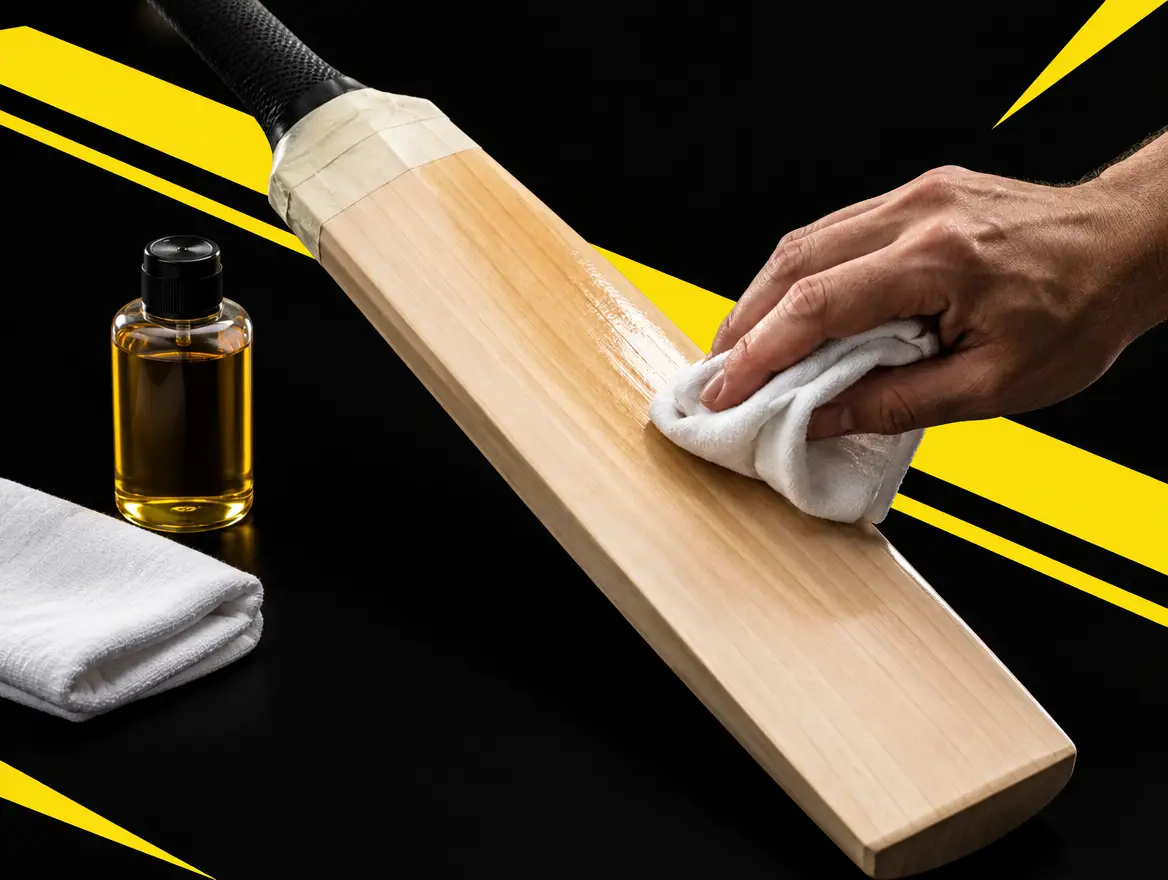
To oil a cricket bat, apply a thin coat of raw linseed oil to the face, edges and toe with a clean cloth, wipe off the excess, and let the bat rest flat overnight. Avoid the splice and handle. Oil rarely, because most bats need much less than owners think.
Oil exists to stop the willow drying out and to help it resist moisture. It does not make a bat "better" the more you apply. This is where many bats are quietly ruined.
Use raw linseed oil only
Choose raw linseed oil. Boiled linseed oil contains additives and drying agents that can harden the surface. Avoid cooking oils, vegetable oils and household sprays. They can go rancid, attract dirt or leave a surface that behaves unpredictably.
Light coats, wiped back
Put a small amount on a lint-free cloth, not directly on the bat. Rub it into the face, edges and toe with the grain. Then wipe off whatever the willow has not absorbed. The bat should look and feel almost dry. If your fingers come away oily, you have used too much.
Keep oil off the splice and handle
The splice is where the handle is joined to the blade, usually with glue. Oil seeping into that joint can weaken the bond. Oil on the cane handle and rubber or cloth grip causes slipping and degradation. Tape or mask the area if you are not confident working around it.
Why over-oiling kills a bat
Willow soaked in oil becomes heavy and dull. The fibres lose their spring, the pickup changes and the middle sounds flat rather than crisp. Oil-soaked wood also holds moisture, which makes it more likely to crack, not less.
Consider a junior bat that has been oiled heavily before a season, then left in a hot car boot between matches. The oil sits in the willow, the heat draws it around and softens the surface, and the blade ends up heavy, dark and lifeless within weeks. That outcome is common enough to be predictable, and entirely avoidable with a lighter hand.
How often to oil
My practical view is that a well-prepared bat needs very little. A light refresh once or twice a season, or when the willow looks noticeably dry, is usually plenty. If the bat looks healthy, leave it alone. If a face sheet is fitted, oiling the face is largely pointless anyway.
Everyday Protection: Toe Guards, Face Sheets, Grips and Wipe-Downs
Everyday protection means fitting a toe guard, applying a face sheet, checking the grip and wiping the bat dry after damp sessions. These small habits take minutes and block the three main causes of early failure: moisture at the toe, ball scuffing on the face and loss of control from a worn grip.
Cricket bat toe protection
A toe guard is the cheapest insurance you can buy for a bat. It seals the end of the blade against moisture and absorbs some of the impact from yorkers and from bats being stood on the ground. For junior and club players using a bat with a bare toe, it is one of the best-value upgrades available.
Check it regularly. A guard that has cracked, peeled or let water in is worse than none, because it traps moisture against the wood. Replace it when it wears through.
Face sheets
A face sheet is a clear protective film over the face. It reduces scuffing, helps hold small surface cracks together and keeps oil and moisture out. The MCC Laws of Cricket (Law 5) allow the blade to be covered for protection, strengthening or repair, provided the material does not unfairly damage the ball. It is still worth checking your competition rules on edge or toe covering.
Apply it smoothly and press out bubbles. Replace it when the edges lift or it has worn through, rather than layering new over old.
Grip checks
A worn grip makes a player squeeze harder, twist the bat and mishit. Check it every few matches. Replace it when it is torn, slick or loose. A new grip is a very cheap fix that improves control straight away.
Wipe-down after damp or dewy sessions
After any wet or dewy session, wipe the whole bat with a dry cloth before it goes into the bag. Pay attention to the toe and edges. Never store a damp bat in a sealed bag. Let it dry at room temperature, not near a heater and not in the sun.
How to Store a Cricket Bat in Australian Conditions
Store a cricket bat upright in a kit bag, in a cool, dry room, away from direct sun, heaters and car boots. Australian summers can heat a parked car well beyond what willow tolerates, and damp garages invite mould and swelling. Consistent, moderate conditions protect the bat for years.
Never leave it in a hot car
A closed car in summer can become far hotter than the outside air. The Bureau of Meteorology's climate information shows how intense Australian summer heat can be across most regions. Willow dries out unevenly in those conditions, the glue at the splice can soften, and any oil in the blade is drawn around. If you travel to games, take the bat inside with you or keep it in the cabin with air conditioning.
Store upright, off wet floors
Keep the bat upright with the toe off the ground, ideally in a bag compartment or a stand. Lying a bat flat for long periods against a damp floor can encourage warping and moisture at the toe. A garage floor in a humid coastal suburb is a common culprit.
Use a kit bag that protects
A kit bag with a dedicated bat sleeve keeps the bat from knocks and from rubbing against hard gear. Ventilation matters too. Our guides to cricket bags (how to pack, protect and look after your kit bag) and our cricket kit bags guide cover what to look for, from bat sleeves to airflow.
Preparing the bat for the off-season
Before storing the bat for winter:
- Wipe it down and check for cracks, splits and toe damage.
- Repair or book repairs now, not on the first day of pre-season.
- Replace the grip and toe guard if worn.
- Apply a very light coat of raw linseed oil only if the willow looks dry.
- Store it upright in a cool, dry room inside the bag, not in a shed.
- Check it once or twice over winter.
Australia has big climate differences. A bat stored in a dry inland home faces different risks from one in a humid coastal garage. Adjust your routine to your conditions.
English Willow and Kashmir Willow: Different Care Needs
English Willow is lighter, softer and more responsive, so it needs more careful protection, especially at the toe and edges. Kashmir Willow is typically denser and heavier, and tends to tolerate rough use better, but it does not reward fine repair work as much. Care routines are similar, but the stakes differ.
English Willow
English Willow gives better pickup and feel, but its softer fibres mean it marks, dents and cracks more readily. For these bats, a toe guard and face sheet are close to essential, oiling should be restrained, and storage needs to be careful. A premium bat is worth protecting, and a professional repair can be worthwhile on a good one. Because every English Willow bat varies in grain and pickup, repairs can also slightly change how a bat feels.
Kashmir Willow
Kashmir Willow is typically the budget-friendly, durable option for juniors and casual players. Treat it with the same basics: wipe it dry, keep it out of heat, fit a toe guard and check the grip. But be realistic. A professional repair can cost a meaningful share of the price of the bat, so for many Kashmir Willow bats, replacing is the sensible answer once damage goes beyond a minor fix.
A Season-Long Care Routine
A simple season-long routine is a pre-season check, a quick check after every session, a monthly inspection and an end-of-season service. Short, regular checks catch small problems before they become expensive. This takes a few minutes and suits busy parents and players.
- Pre-season: Inspect for cracks, check the toe guard and face sheet, replace the grip if needed, and confirm the bat is dry and stable.
- After every session: Wipe the bat dry, especially after dew or rain. Remove it from the bag if it was damp.
- Every few weeks: Look closely at the toe, edges and splice. Run a fingernail along any line you can see. Check whether it is getting longer or opening.
- Mid-season: Refresh the face sheet if lifting, and oil lightly only if the willow looks dry.
- End of season: Do a full check, fix what needs fixing, and store the bat properly for winter.
Cricket Bat Repair Triage: DIY, Professional or Replace?
Surface cracks are usually a home fix, edge cracks and toe splits usually need a professional, and splice or handle damage often means replacing the bat. The right call depends on how deep the damage runs, where it sits and how much the bat is worth to the player.
| Damage | Typical cause | Verdict | Notes |
|---|---|---|---|
| Hairline surface crack in the face | Dry willow, minor ball impact | DIY | Monitor it, seal with wood glue if it holds together, then fit a face sheet |
| Open or lengthening face crack | Repeated impact on a weak point | Professional or replace | Do not keep playing on it |
| Edge crack running with the grain | Mishits, hard balls on the edge | Professional | Glue and bind if the wood is sound; replace if the edge is crushed |
| Toe split or splayed toe | Yorkers, damp storage | Professional | Early repair works; late repair often does not |
| Dented or crushed toe | Heavy impact, soaked toe | Professional or replace | Depends on depth and the bat's value |
| Loose or worn grip | Normal wear | DIY | Replace the grip |
| Cracked or loose splice | Glue failure, heat, over-oiling | Replace or professional assessment | Structural, so a cheap fix is rarely safe |
| Handle split or wobble | Impact, stress at the join | Replace in most cases | Affects control and safety |
| Bat feels heavy, dead and oily | Over-oiling and heat | Replace if severe | Light cases may recover with time and dry storage |
Cricket Bat Crack Repair: What You Can Safely Do at Home
You can safely repair a hairline surface crack at home by cleaning the area, working a small amount of wood glue into the crack, wiping off the excess and letting it cure before fitting a face sheet. Anything that opens under pressure, runs deep or sits near the splice needs a professional.
Step by step for a surface crack
- Wipe the bat clean and let it dry completely.
- Gently flex the bat or press the area. If the crack opens noticeably, stop. This is not a DIY job.
- Work a small amount of PVA wood glue into the crack with a thin tool.
- Wipe off the excess straight away.
- Hold the crack closed with firm pressure or a soft clamp or tape until the glue cures.
- Lightly sand any dried glue, then apply a face sheet over the area.
Avoid superglue. It dries brittle, can seep into the fibres and is harder for a professional to work around later.
When to stop
Stop and seek advice if the crack is long, on the edge, near the toe or splice, or if it grows after you repair it. Playing on a crack that is spreading can turn a repairable bat into a write-off in a handful of matches. Cracks do not heal by themselves.
When to Replace a Cricket Bat
Replace a cricket bat when the damage is structural (splice, handle or deep splits), when repair would cost a large share of a new bat, or when the bat has lost its pickup and sound. Level and budget matter: a club player with a premium bat may repair, while a junior on a growing frame often should not.
Replace when the damage is structural
A loose splice, a handle split or a crack running deep through the blade is a replace decision. These faults affect control and can fail mid-shot. No amount of tape or glue makes them safe.
Replace when repair costs too much
Compare the repair quote with the price of a suitable new bat. If the repair is close to the price of a replacement, the new bat usually wins, because the repair leaves you with the same worn blade. For a lower-priced bat, repair rarely makes sense beyond the basics.
Replace when the bat no longer suits the player
Juniors outgrow bats. A bat that is too heavy or too long leads to poor technique and more mishits, which is damage waiting to happen. Our Cricket Bat Weight Guide helps you check whether the current bat still fits. Our guide to the best cricket bats in Australia is a useful starting point when comparing options.
Replace when the bat is dead
If a bat has lost its ping, sounds dull and feels heavy because of over-oiling, heat or age, no repair brings it back. A soft, tired blade is a sign it has done its job.
The Right Fix Suits the Player, Not the Price Tag
The best repair decision is the one that suits the player's level and the bat's value, not the most expensive option. A premium English Willow bat in a senior player's hands can justify a professional repair. A junior's Kashmir Willow bat usually cannot. Good advice should help you buy and repair confidently, without overspending.
There is a lot of noise in the sporting goods industry, and much of it pushes people toward the most expensive product or the most elaborate fix. That is not how I approach it. Whether a customer is a junior picking up a first English Willow bat or a parent protecting a bat already bought, the question is the same: what suits this player, in these conditions, on this budget?
Here is the position I hold on repair:
- Fix early, cheaply and honestly. A toe guard, a face sheet and a dry cloth do more for most bats than any repair service.
- Do not spend premium money on a bat that has lost its life. If a bat is dead or structurally compromised, a repair is money chasing money.
- Do not replace a good bat for a cosmetic crack. A hairline surface mark on a bat that still plays well is not a reason to spend on a new one.
- Match the answer to the level. A grassroots junior, a club regular and a first-grade batter each have different needs, and each deserves different advice.
This thinking sits behind how we sell bats. Every English Willow bat is slightly different in grain, weight distribution and pickup, and many customers are hesitant to buy a premium bat online without seeing it. So we run a personalised selection process. We share photos, weights and pickup feedback on shortlisted bats, and guide customers based on age, playing style and level of cricket. That has improved confidence on interstate online orders, cut down unsuitable purchases and brought repeat customers and referrals. The same logic applies after the purchase: honest advice, suited to your level and playing style, and not just the most expensive option.
If your bat is beyond repair, browse the Highmark Cricket bat range. If you are not sure whether to repair or replace, contact the team. We will give you honest advice on the right replacement for your level and conditions, and on a kit bag that keeps your next bat protected. Stock ships with fast dispatch from Melbourne.
References
- MCC, Laws of Cricket (Law 5: The Bat)
- Bureau of Meteorology, Climate information for Australia
- Wikipedia, Cricket bat
Frequently asked questions
How often should I oil a cricket bat?
Very rarely. A well-prepared bat usually needs only a light coat of raw linseed oil once or twice a season, or when the willow looks dry. If the bat feels oily or heavy, you have used too much. Never oil the splice or handle, and skip oiling the face if a face sheet is fitted.
Can you fix a cracked cricket bat?
Sometimes. A hairline surface crack that stays closed can often be sealed at home with wood glue and covered with a face sheet. Edge cracks and toe splits usually need a professional. Cracks that open under pressure, or that sit near the splice or handle, usually mean the bat should be replaced.
Can you keep playing with a cracked cricket bat?
Only if the crack is minor and stable. A small hairline surface crack that does not grow can be monitored and protected with a face sheet. A crack that lengthens, opens or sits on the edge or toe is likely to spread quickly, so stop using the bat until it has been assessed.
Is a toe guard worth it?
Yes. A toe guard seals the end of the blade against moisture and absorbs some of the impact from yorkers and from the bat being stood on the ground. It costs little compared with a bat and protects the most vulnerable part. Replace it when it cracks, peels or lets water in.
How should I store a cricket bat over winter?
Wipe it down, repair any damage, replace a worn grip and toe guard, then store it upright in a kit bag in a cool, dry room. Keep it away from sheds, garages, heaters and car boots. Check it once or twice over winter and before pre-season.
